
Best Day Trips from Porto: History, UNESCO Sites, and Hidden Gems
Porto has a way of keeping you anchored. The Ribeira waterfront pulls you back, the port wine is too good, and somehow it’s already Tuesday and you haven’t left yet. That’s not a problem. It’s a sign you’re doing Porto right.
But the city also happens to sit at the center of one of the most historically rich regions in Europe. Within 2 hours, you can stand in the birthplace of a nation, ride through one of the world’s oldest protected wine regions, walk a medieval pilgrimage city across the Spanish border, or wander a lagoon town that looks like it was designed by someone who had only ever dreamed about the color blue.
None of these require a heroic effort. Most are easy by train. All of them reward the kind of traveler who wants more than a view.
Here are the best day trips from Porto, with logistics, history, and my honest take on each.
This page contains affiliate links: if you purchase through them, I may earn a commission at no extra cost to you. Thank you for supporting my travel blog and helping me bring more UNESCO-focused content your way!
Before You Go: Getting Around from Porto
Porto’s main train station is Campanhã: this is where long-distance and intercity trains depart. The beautiful São Bento station (the one covered floor-to-ceiling in azulejo panels depicting Portuguese history) handles regional and suburban routes. Know which station you need before you leave.
The Andante card covers Porto’s metro and urban trains, but you’ll need separate tickets for intercity trains to most destinations on this list. Buy those through CP (Comboios de Portugal). Book in advance in summer, especially for the Douro Valley train, which fills up.
For destinations without good rail connections (Peneda-Gerês, Ponte de Lima, Amarante), a rental car or a booked day tour gives you the most flexibility. I’ll note the best option for each destination below.
GuruWalk offers free walking tour with local guides.
All you pay is a tip at the end of the tour. Recommend tip is €15 to €50 per person.
Click this link to learn more about their tours in some of the cities listed below.
1. Guimarães: The Birthplace of Portugal
Best for: UNESCO collectors, medieval history, and the emotional weight of standing where a nation began
What to see in Guimarães
Afonso Henriques was likely born in Guimarães Castle around 1100. He went on to become Portugal’s first king, and the medieval castle where he was born still stands largely intact today. Walking the cobblestone streets of the old quarter feels less like sightseeing and more like standing inside a founding document.
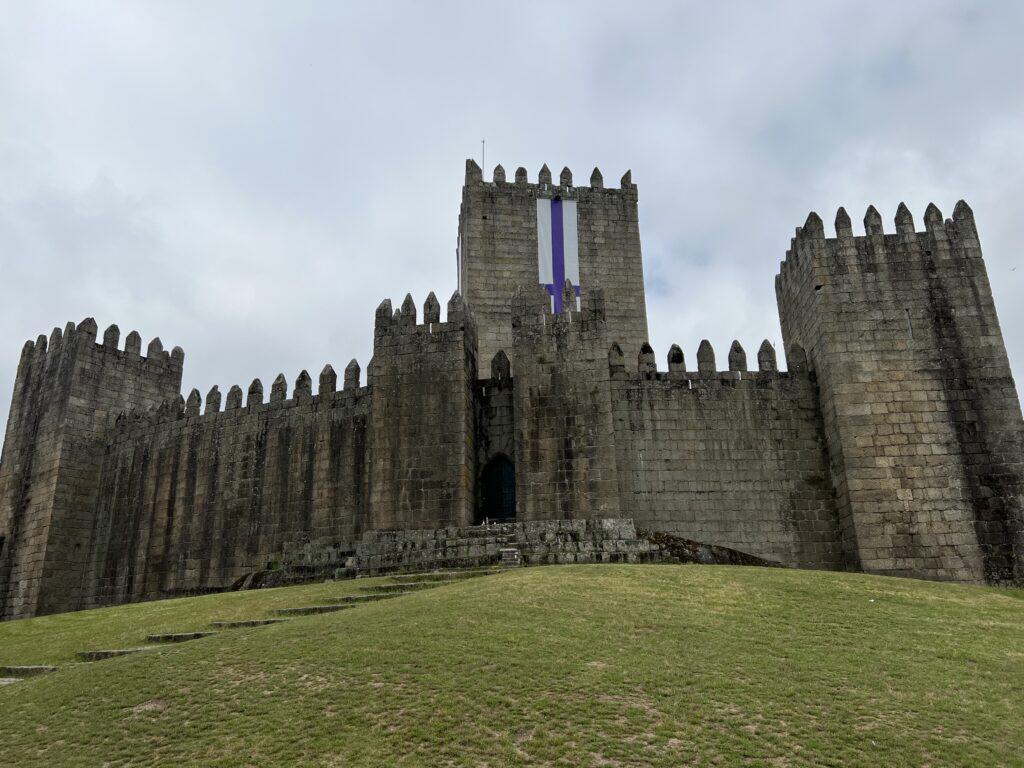
The Palace of the Dukes of Braganza is the other anchor: a palace dating back to the 1400s with tapestries, artillery collections, and the kind of scale that makes you reckon with the distance between 1415 and now.
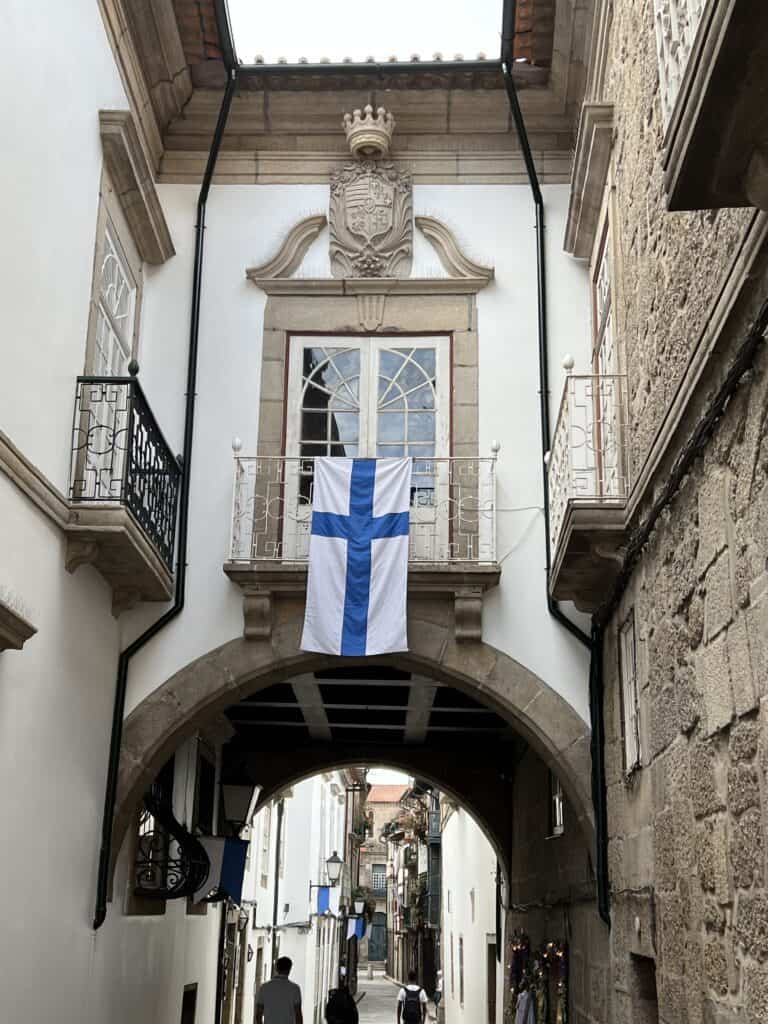
The phrase you’ll see everywhere in Guimarães: Aqui nasceu Portugal — “Here Portugal was born.” That phrase is not tourist copy. It’s been the city’s identity for 900 years.
Nerd Alert! ✨ Afonso Henriques didn’t inherit Portugal. He fought for it. After declaring himself king following his victory at the Battle of Ourique in 1139, he imprisoned his own mother in Guimarães Castle. She had allied with Castile against him and stayed there for the rest of her life.
How to get from Porto to Guimarães
- By train: Approximately 1 hour from Porto Campanhã or São Bento
- By car: About 50 minutes / 34 miles (55 km) via A3
UNESCO status: Yes: Historic Centre of Guimarães, inscribed 2001
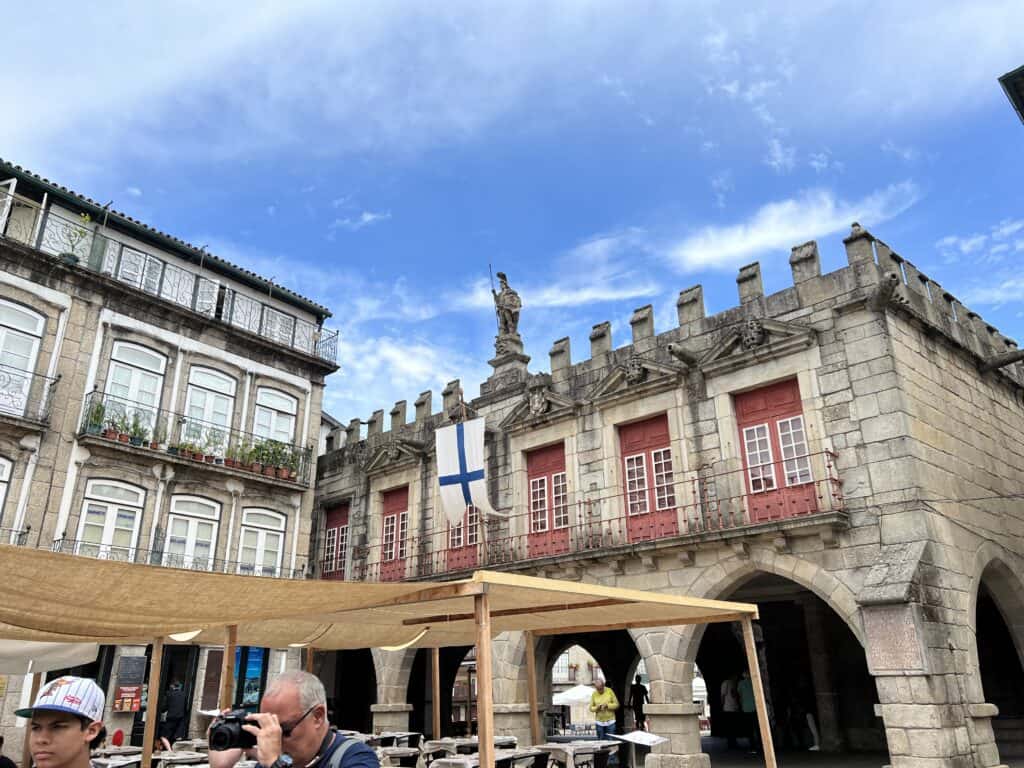
My tip: Take the cable car up to Penha hill for the best view of the city below. Go mid-morning, then come back down for lunch before the day-trippers from Porto fill the restaurants. And build some time into your afternoon for Oliveira Square in the heart of the old town. There are cafes, shops, and plenty of places to sit. If you’re traveling with a group, this is the spot where everyone can do their own thing: grab a snack, browse a shop, or just sit and watch the square. It’s one of those places that earns more the longer you stay in it.
For the complete guide (what to see, where to eat, full logistics): click here for my full Guimarães planning guide.
2. Braga: Portugal’s Sacred City
Best for: Baroque religious architecture, Roman history, pairing with Guimarães
What to see in Braga
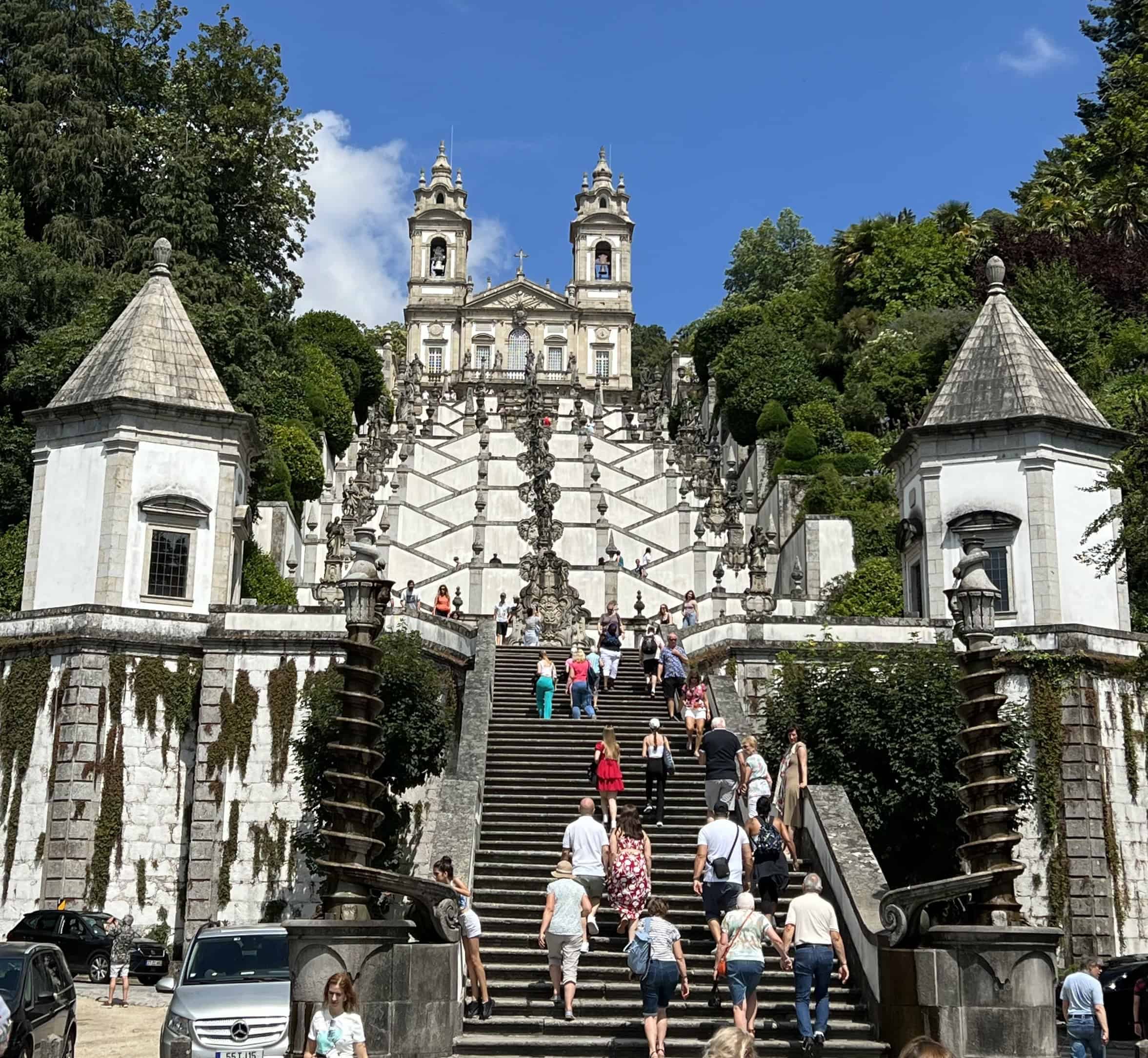
Bom Jesus do Monte is Braga’s most iconic landmark: a Baroque pilgrimage sanctuary on a forested hillside outside the city, with a monumental staircase climbing 383 feet (116 meters) from base to church. Each landing represents a stage of the Passion, which are the final hours of Christ’s life from his arrest through his crucifixion, with fountains symbolizing the senses and virtues. The funicular (operating since 1882 and one of the oldest water-powered funiculars in the world) is still the most practical way up.
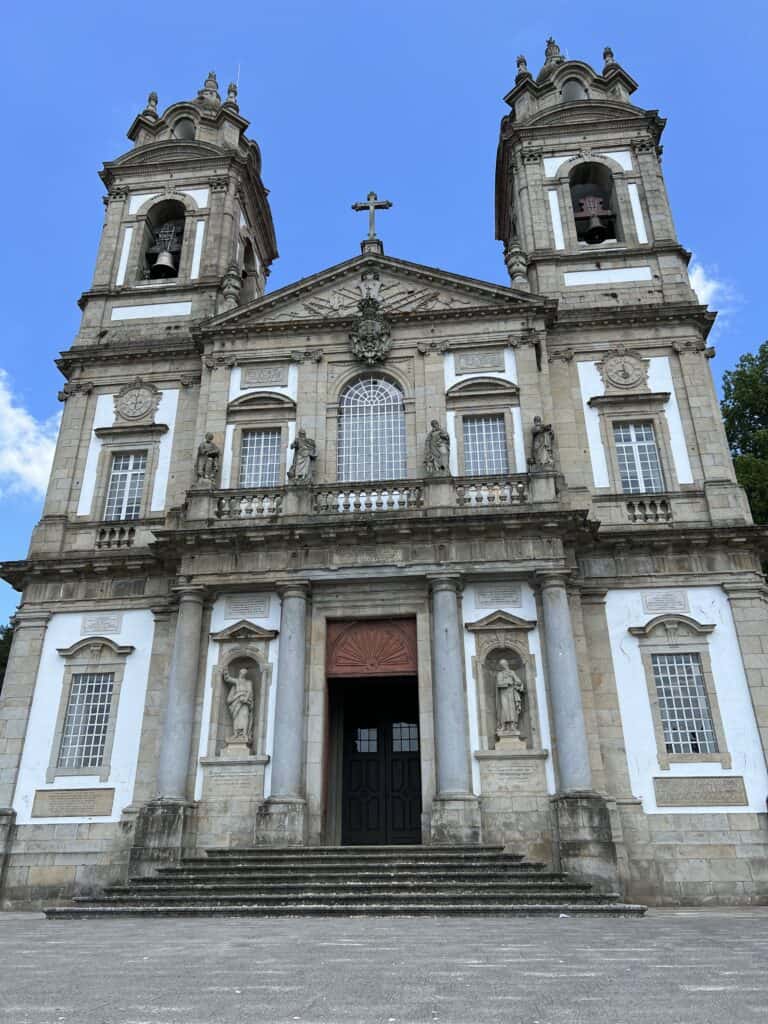
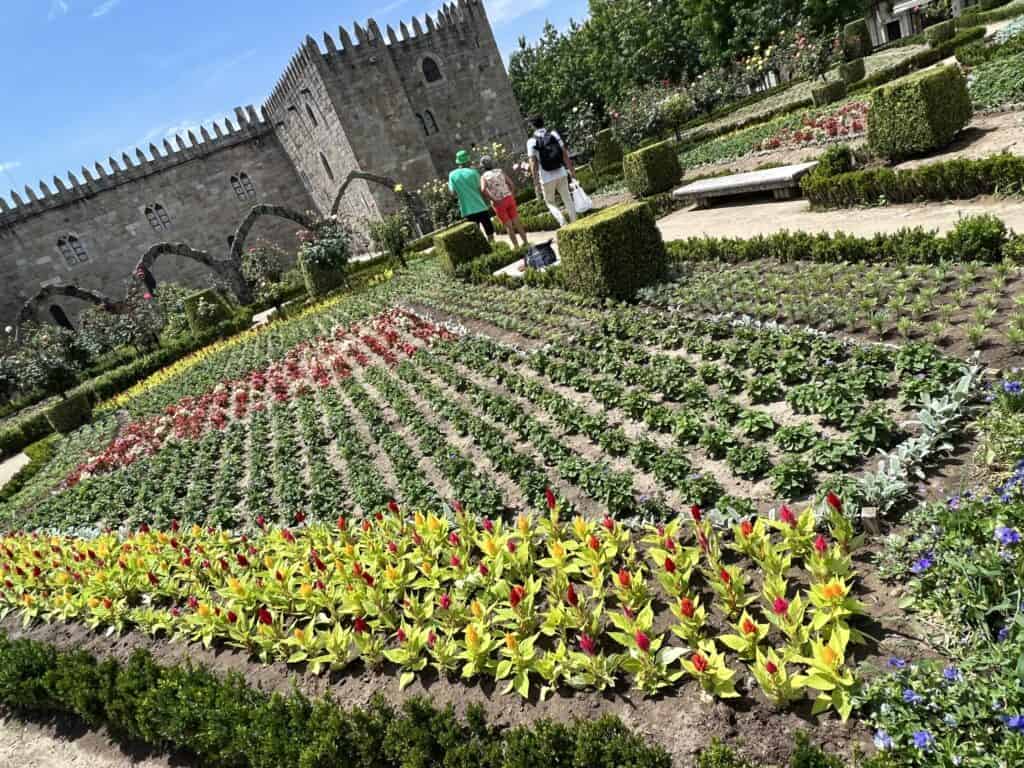
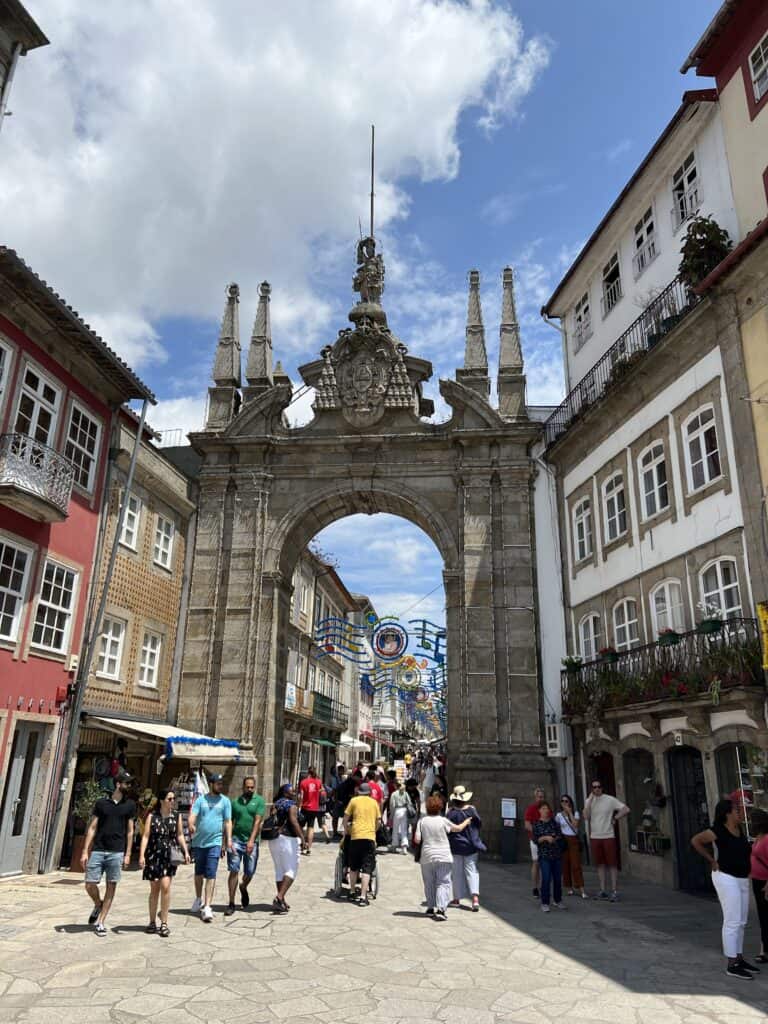
The old town of Braga deserves at least a few hours on its own. The Sé de Braga, the city’s cathedral, has been under continuous construction since the 1000s, which means you’re looking at a building that contains Romanesque, Gothic, Manueline, and Baroque elements in a single structure.
Nerd Alert! ✨ Braga was a major Roman city, Bracara Augusta, founded around 16 BC as the administrative capital of the Roman province of Gallaecia. It was one of the most important cities in the entire Roman Iberian Peninsula. Visible Roman ruins remain beneath the modern streets, including a section of road discovered under the cathedral.
How to get from Porto to Braga
- By train: Approximately 1 hour from Porto Campanhã or São Bento
- By car: About 55 minutes / 34 miles (55 km) via A3
UNESCO status: Yes: Sanctuary of Bom Jesus do Monte, inscribed 2019
My tip: Take the funicular up and walk down, not the other way around. Walking down is the way to actually read the staircase. As you descend through each landing, you start to understand what the truly penitent were doing when they climbed on their knees in the other direction: pausing at each level, stopping at the small altars built into the landings, making specific offerings at each one. I’ll be honest: I didn’t know enough about the Passion when I visited to catch every detail of the symbolism as I walked. It’s worth reading up before you go, or the layers of meaning in the staircase’s design will go right past you the way they did for me. I cover more of this in my full Braga guide.
One observation that stuck with me from that visit: our guide pointed out that the Catholic Church has a long tradition of placing cathedrals and sanctuaries on hilltops, not just for the dramatic views, but deliberately. Elevating the church above the city was a way of literally and symbolically placing God above everything else, making people feel watched over from above. Once you hear that, you start noticing it everywhere. If you’ve been to Lyon or Marseille, you’ve seen the same logic at work. Both cities have their most prominent cathedrals sitting high above the urban landscape for exactly this reason.
Braga and Guimarães are only 15 miles (25 km) apart. With a rental car or taxi between them, pairing both cities in one long day is very doable. Train connections between the two cities are less direct.
For the complete guide to Braga (what to see and how to plan your day): click here for my full Braga planning guide.
3. Aveiro: Portugal’s Lagoon Town
Best for: Canal scenery, Art Nouveau architecture, striped beach houses, easy train access
What to see in Aveiro
Aveiro sits on the Ria de Aveiro, a long coastal lagoon separated from the Atlantic by a narrow strip of sand. The flat-bottomed moliceiro boats that once harvested salt and seaweed are still here, now painted with cheerful illustrated panels and carrying tourists instead.
The canal district near the central market is the most photogenic part of town, with Art Nouveau buildings in pinks and yellows lining the waterways. The Museu de Aveiro, housed in a former convent, is worth an hour for its extraordinarily gilded interior.
A 15-minute bus ride away, the beaches of Costa Nova deliver the other Aveiro icon: the palheiros, traditional fishing houses painted in bold candy-colored vertical stripes. You’ve seen the photos. They look exactly like that in real life.
Nerd Alert! ✨ Aveiro was once a prosperous medieval port city and then the mouth of the lagoon silted over in the 1500s, cutting the town off from the sea. The population collapsed. Aveiro went into economic decline for nearly 200 years before engineers reopened the channel in 1808. The city you see today was essentially rebuilt on the back of that recovery.
How to get from Porto to Aveiro
- By train: About 1 hour from Porto Campanhã, one of the easiest and most rewarding train day trips from Porto
- By car: About 1 hour / 47 miles (75 km) via A1
My tip: The ovos moles (small egg-yolk pastries sold in wooden barrel-shaped packaging) are a genuine Aveiro specialty. Get them from a traditional bakery, not the souvenir shops near the canal.
4. The Douro Valley: The World’s Oldest Protected Wine Region
Best for: UNESCO landscape, wine tastings, the most beautiful train ride in Portugal
What to see in the Douro Valley
In 1756, the Marquis of Pombal drew official boundaries around the Douro River wine region to protect quality and control trade. Those boundaries still exist. The Douro Valley became the first officially protected wine region in the world, and it still produces the port wine that has made Portugal famous for over 300 years.
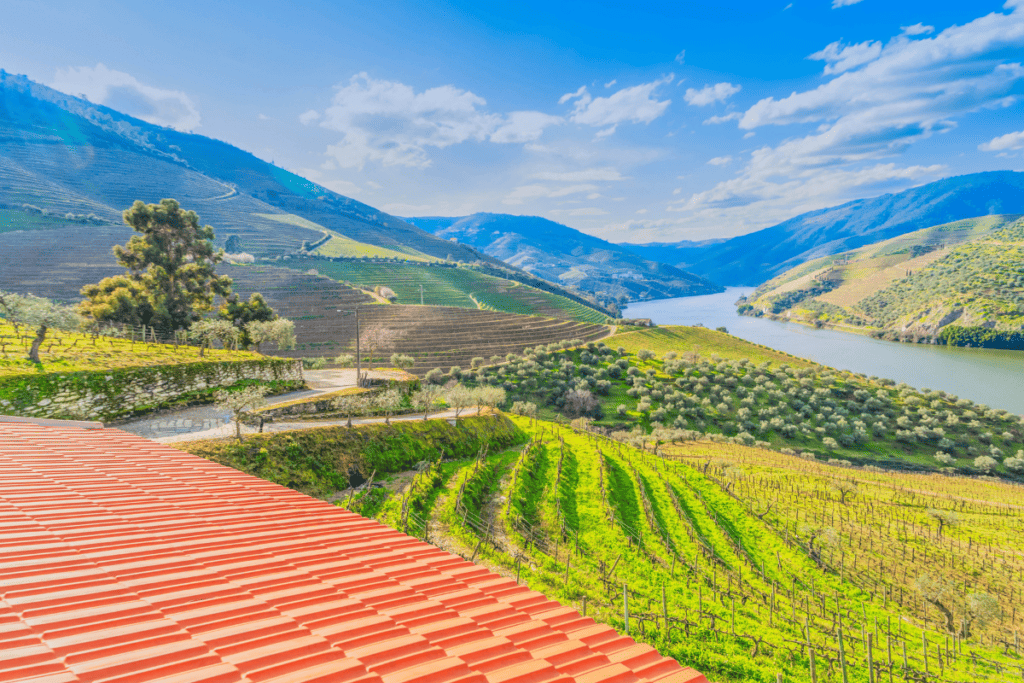
The landscape is what UNESCO inscribed: terraced vineyards climbing impossibly steep slate hillsides on both sides of the river, carved out by hand over hundreds of years. The visual effect from the train window is unlike anything else in Europe.
Pinhão is the best base for a day trip. Visit a quinta (wine estate) for a tasting, take a short river cruise, or simply sit on a terrace café and reckon with the fact that this entire landscape was shaped by human hands.
Nerd Alert! ✨ Port wine is not simply wine with brandy added after the fact. The brandy (aguardente) is added during fermentation, stopping the yeast before all the sugar converts to alcohol. That is why port is sweet. The technique was developed in the late 1600s partly to preserve the wine for the long sea voyage to England. Many of the great port wine houses (Sandeman, Cockburn’s, Graham’s) were founded by British families for exactly this reason.
How to get from Porto to the Douro Valley
- By train: The scenic Douro line from São Bento to Pinhão takes approximately 2.5 hours. Sit on the right side heading east for the river views. Buy your return ticket before you board.
- By car: About 1.5 hours to Pinhão / 78 miles (125 km) via A4
- By tour: Several operators run full-day tours from Porto combining wine tastings and a river cruise. Search Douro Valley day tours here.
UNESCO status: Yes: Alto Douro Wine Region, inscribed 2001
My tip: An overnight in the valley is worth it if your schedule allows. The evening light on the terraces and the morning mist rising off the river are two different experiences entirely.
5. Coimbra: A University City with a Baroque Library and Bats
Best for: UNESCO history, medieval royal tombs, architecture that will stop you mid-step
What to see in Coimbra
Coimbra was Portugal’s capital before Lisbon. The University of Coimbra, founded in 1290, is one of the oldest universities in continuous operation in the world, and its historic buildings occupy an entire hilltop above the city.
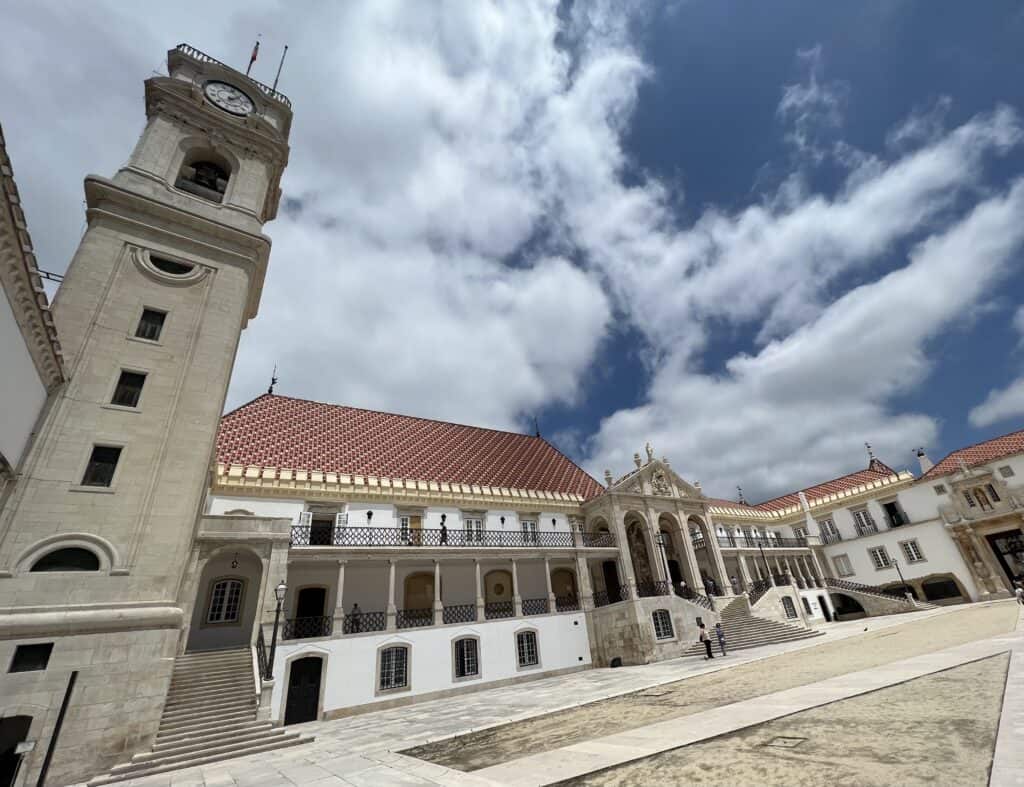
The Biblioteca Joanina is the reason most people make the trip. Built between 1717 and 1728, it holds around 300,000 volumes on floor-to-ceiling gilded walnut shelves across 3 interconnected rooms. A colony of bats lives inside, emerging at night to eat the insects that would damage the manuscripts. The university provides leather desk covers to protect them from bat droppings. This is official university policy. Photography inside the library is not permitted, which means you will have to see it for yourself.
Down in the lower city, the Monastery of Santa Cruz holds the tombs of Portugal’s first 2 kings: Afonso Henriques and his son Sancho I.
Nerd Alert! ✨ Coimbra’s students still wear black academic capes (the capa e batina), a tradition dating to the 1500s that survived hundreds of years of political change. Each May, students burn colored ribbons representing their academic faculty in a ceremony called the queima das fitas. The entire city celebrates. The colors differ by discipline, and the burning is taken very seriously.
How to get from Porto to Coimbra
- By train: Approximately 1 hour from Porto Campanhã on the Alfa Pendular (high-speed) service
- By car: About 1.5 hours / 75 miles (120 km) via A1
UNESCO status: Yes: University of Coimbra, Alta and Sofia, inscribed 2013
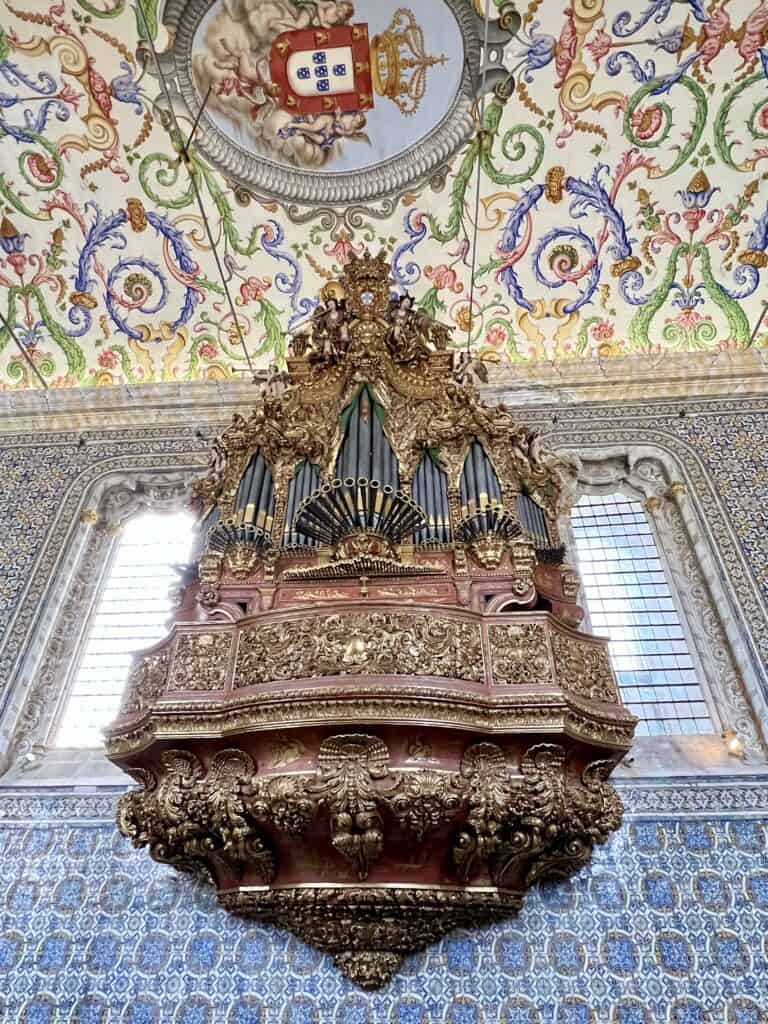
My tip: The Joanina Library has timed entry and limited capacity. Book in advance especially in summer. This one sells out, and there’s no other way to see it.
6. Santiago de Compostela: A Camino Pilgrimage City Across the Border
Best for: UNESCO cathedral, the Camino de Santiago experience, and a day trip unlike any other on this list
What to see in Santiago de Compostela
Yes, this is Spain. But it belongs on a Porto day trip list without apology. Santiago de Compostela is the endpoint of the Camino de Santiago, the medieval Christian pilgrimage route that stretches across Europe. For over 1,000 years, pilgrims have been walking hundreds of miles to reach one destination: the Cathedral of Santiago de Compostela, which is said to contain the tomb of the Apostle James.
The cathedral is magnificent: Romanesque at its core, with Baroque towers that dominate the Plaza del Obradoiro. The famous Botafumeiro (a giant incense burner suspended from the nave ceiling and swung dramatically during certain Masses) is one of the most theatrical moments in religious architecture anywhere in the world. Even on an ordinary Tuesday afternoon, pilgrims arrive at the plaza having walked for weeks or months, and the emotion in that square is palpable.
You don’t need to have walked a single mile of the Camino to feel it.
Nerd Alert! ✨ The pilgrimage tradition began after a hermit reportedly discovered the tomb of the Apostle James in the 800s, guided by a field of stars, which is likely where the name Compostela originates (campus stellae, “field of stars,” in Latin).
By the 1100s, Santiago had become 1 of the 3 most important pilgrimage destinations in Christendom, alongside Jerusalem and Rome. The iconic scallop shell that marks Camino routes worldwide is the pilgrim’s traditional badge, and the origin of why scallops are called “coquilles Saint-Jacques” in French.
How to get from Porto to Santiago de Compostela
- By train: Approximately 1.5–2 hours from Porto Campanhã via Vigo (with a change). Check both CP and Renfe connections, as you may need 2 separate tickets.
- By car: About 2 hours / 90 miles (145 km) via A3/AP-9
- By tour: Day tours from Porto are available. Here are more details about the day tours to Santiago de Compostela.
UNESCO status: Yes: Santiago de Compostela (Old Town), inscribed 1985. The Camino routes are separately inscribed.
My tip: The Pilgrim’s Mass at the cathedral at noon is free and extraordinary to witness. Arrive early if you want a seat.
7. Viana do Castelo: Atlantic Coast and a Hidden Gem of the Minho
Best for: Gothic architecture, local atmosphere, and a beautiful coastline most visitors never reach
What to see in Viana do Castelo
Viana do Castelo sits at the mouth of the Lima River on Portugal’s northern Atlantic coast, and it is one of the most rewarding cities in the country that most visitors completely skip. The historic centre is built around a Gothic Santa Maria Major Church and a striking Praça da República with a fountain built in the 1500s at its center.
The Basilica of Santa Luzia perches on the hill above the city, similar in spirit to Braga’s Bom Jesus but far less visited. The hilltop view takes in the river, the Atlantic coastline, and the green Minho hills stretching north toward Spain.
Nerd Alert! ✨ Viana do Castelo was one of the most important ports in northern Portugal during the 1400s and 1500s, particularly for the cod fishing trade with Newfoundland. Portuguese fishermen were crossing the Atlantic to the Grand Banks for bacalhau (salt cod) as early as the 1500s, arguably before John Cabot’s better-documented 1497 voyage.
The city’s Renaissance and Baroque civic architecture reflects exactly how prosperous that trade made the town.
How to get from Porto to Viana do Castelo
- By train: Approximately 1.5 hours from Porto Campanhã, direct trains on the Minho line
- By car: About 1 hour / 47 miles (75 km) via A28
My tip: Viana pairs well with Ponte de Lima for a full Minho day if you have a rental car. Do Ponte de Lima in the morning, drive to Viana for the afternoon, and catch the train back to Porto from Viana in the evening.
8. Ponte de Lima: Portugal’s Oldest Town
Best for: Slow travel, Roman history, Vinho Verde country
What to see in Ponte de Lima
Ponte de Lima lays claim to being the oldest town in Portugal, with a history stretching to Roman times. The Roman bridge that gives the town its name, built around 100 AD and partially reconstructed in the 1300s, still spans the Lima River and is still the best way to arrive in the old town.
The town is small and walkable in an afternoon. The Igreja Matriz dates to the 1400s. The riverside gardens along the Lima are among the most pleasant stretches in the Minho. Every other Monday, one of the oldest markets in Portugal takes over the riverbank.
Nerd Alert! ✨ Roman soldiers reportedly identified the Lima River as the mythical River of Forgetfulness (the Lethe) from classical mythology, and refused to cross it for fear of losing their memories. Their general, Decimus Junius Brutus, waded across alone and called each soldier by name from the far bank to prove their memories were intact.
Whether the story is fact or folklore, it reveals how genuinely remote and mysterious this corner of the peninsula felt to the Romans.
How to get from Porto to Ponte de Lima
- By car: About 1 hour / 50 miles (80 km) via A3 then A27. Public transit is possible but slow; a car is the better choice here.
My tip: Have a long lunch on the riverbank with a glass of local Vinho Verde. Ponte de Lima is a town for slowing down, not rushing through.
9. Amarante: The River Town Most Visitors Skip
Best for: Baroque architecture, Napoleonic history, a relaxed pace without crowds
What to see in Amarante
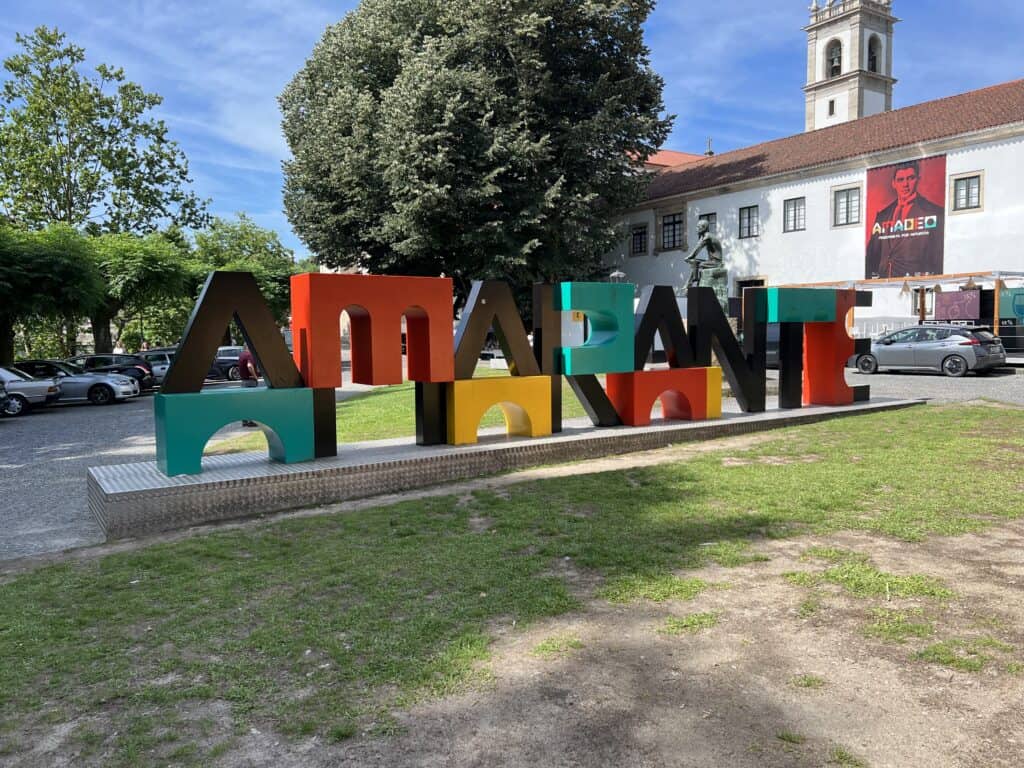
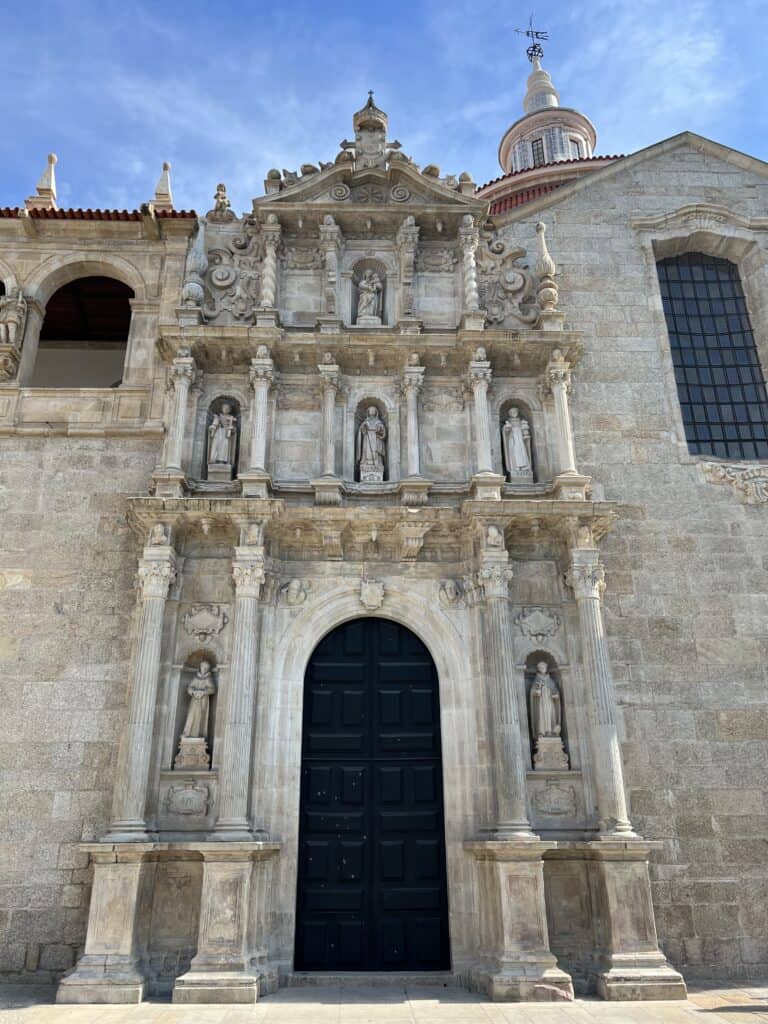
Amarante sits where the Tâmega River bends, and the view of the São Gonçalo Monastery reflected in the water is one of the most photographed scenes in northern Portugal, and still largely off the tourist radar. The monastery was built beginning in the 1500s over the tomb of the local saint, with a gilded Baroque interior that rivals anything in Porto.
Nerd Alert! ✨ In May 1809, Amarante held out against Napoleon’s forces for 2 weeks, the longest siege of the Peninsular War in Portugal. General Silveira’s resistance delayed the French advance long enough to allow Portuguese defenses to reorganize. A small museum near the bridge tells the story.
How to get from Porto to Amarante
- By car: About 1 hour / 37 miles (60 km) via A4. Train connections require changes and are slower; a car is recommended.
- By tour: Some Porto operators include Amarante in Douro Valley day trip itineraries.
My tip: Amarante has a relaxed rhythm. Arrive mid-morning, visit the monastery, and have a long lunch on a terrace over the river. That’s the full Amarante experience.
10. Matosinhos: Seafood and the Atlantic, 30 Minutes from Porto
Best for: A half-day escape, the best grilled fish of your trip, and a breath of Atlantic air
What to see in Matosinhos
Matosinhos is Porto’s fishing port and home to what may be the best grilled fish lunch in Portugal. The restaurants along Rua Heróis de França serve some of the freshest seafood in the country, at prices that feel like the clock stopped sometime in the 1990s.
The formula here is simple: walk along the Atlantic, stop at the Igreja do Senhor Bom Jesus de Matosinhos (a significant pilgrimage church in its own right), then settle in for a long lunch with a cold Vinho Verde and a whole grilled fish.
Nerd Alert! ✨ The Church of Bom Jesus in Matosinhos houses a wooden crucifix that, according to tradition, was carved by Nicodemus, the figure from the Gospel of John who helped prepare Christ’s body for burial. The crucifix was supposedly set adrift at sea by early Christians to protect it from persecution, discovered on the Portuguese coast, and brought to Matosinhos in the 1100s.
Legend or not, the pilgrimage tradition inspired by this story has drawn visitors to this church for over 800 years.
How to get from Porto to Matosinhos
- By metro: Line A (red) from central Porto, about 30 minutes. The easiest day trip on this entire list.
- By car: About 20 minutes / 7.5 miles (12 km)
My tip: Go on a weekday if you can. Matosinhos on a sunny weekend becomes a Porto exodus and the restaurant wait times reflect it.
Bonus Half-Day: Quinta de Aveleda – Vinho Verde Country, 40 Minutes from Porto
Best for: Wine lovers, garden lovers, a relaxed half-day with lunch
Getting there
- By car: About 40 minutes / 25 miles (40 km) via A4 toward Penafiel
How long: Half day — vineyard tour, garden walk, and lunch fits comfortably in a morning and early afternoon
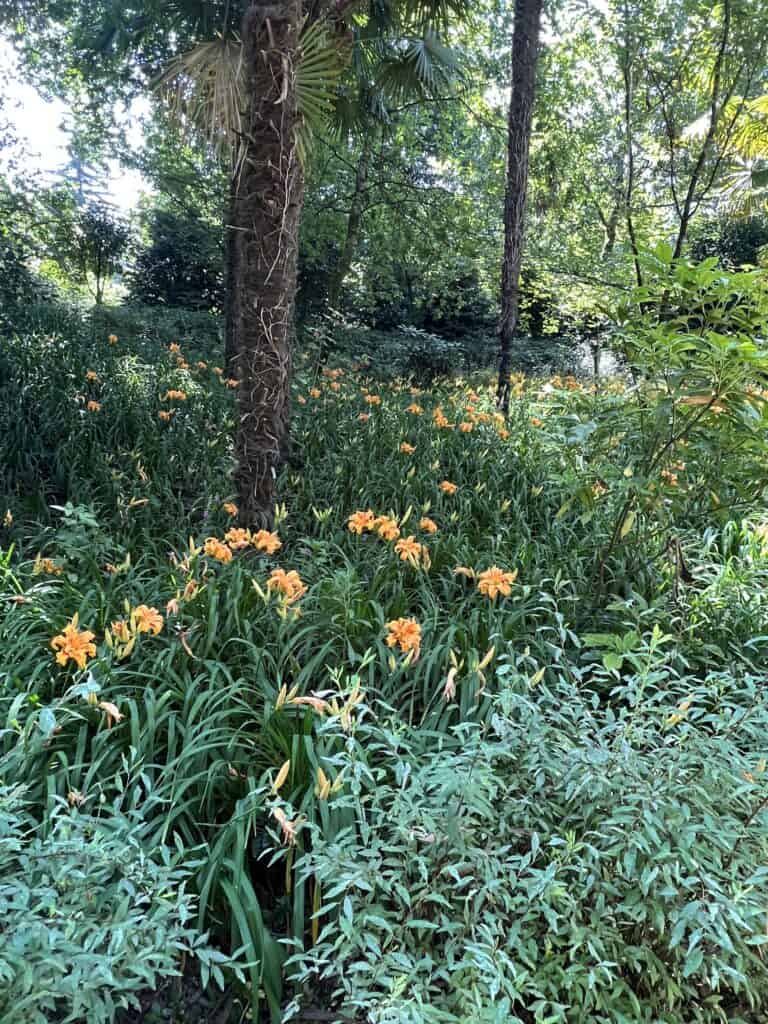
If you want to experience the Vinho Verde wine region without committing to a full day in the Minho, Quinta de Aveleda is the answer. The estate is one of Portugal’s most established Vinho Verde producers, and the grounds are as much a garden visit as a wine visit: ancient trees, manicured hedgerows, and a working vineyard that has been in the same family for generations.
We spent a half day here with a vineyard and garden tour followed by lunch on the estate. The tour gives you a real sense of how Vinho Verde is produced: lighter, lower alcohol, slightly effervescent by nature of the region’s granite soils and Atlantic climate, without requiring any prior wine knowledge to enjoy it. The garden alone is worth the trip.
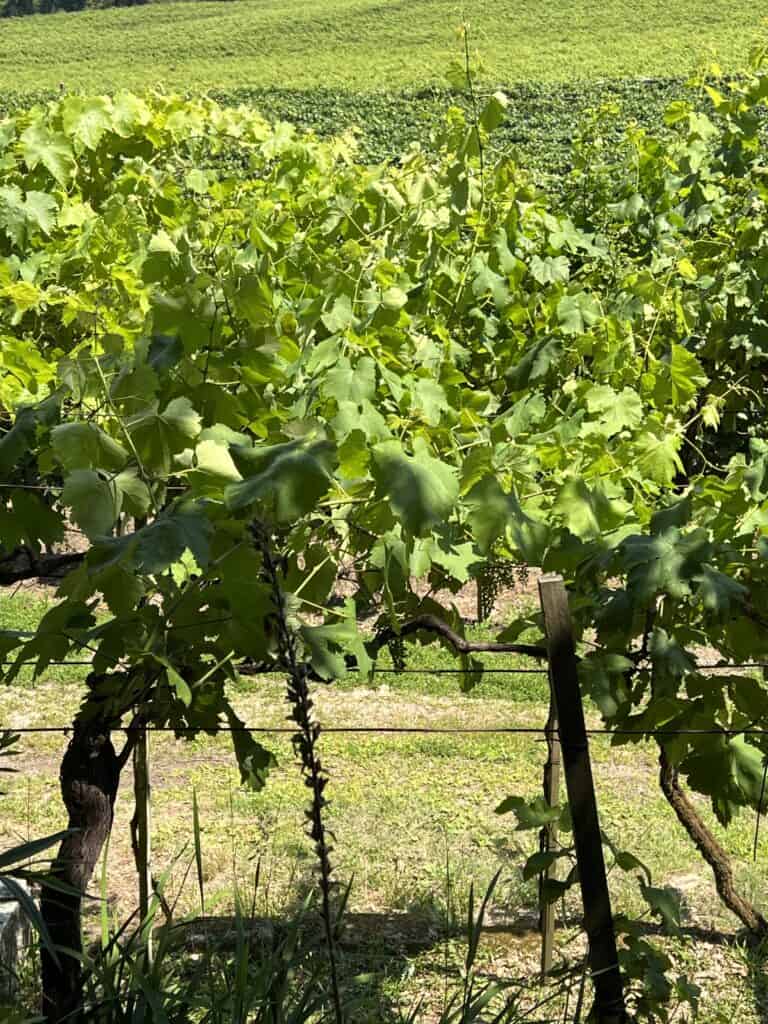
My tip: Book the tour and lunch in advance directly through the quinta. It’s a popular visit and the lunch experience in particular fills up. Check current availability and book a visit online.
How to Choose: Which Day Trip Is Right for You?
GuruWalk offers free walking tour with local guides.
All you pay is a tip at the end of the tour. Recommend tip is €15 to €50 per person.
Click this link to learn more about their tours in some of the cities listed.
Best for UNESCO collectors: Guimarães, Coimbra, Douro Valley, or Santiago de Compostela, each with a distinct designation and serious historical depth.
Best by train without a car: Aveiro, Braga, Guimarães, Coimbra, Viana do Castelo, Matosinhos, or Santiago: all have solid direct connections from Porto.
Best if you only have half a day: Matosinhos (metro + lunch), Aveiro (train + canals), or Quinta de Aveleda (vineyard tour and lunch, 40 minutes from Porto).
Best two-city combination: Guimarães + Braga, close to each other, completely different personalities, both about an hour from Porto.
Best for wine lovers: Douro Valley: the scenic train ride, a quinta tasting, and a river view make for a perfect full day.
Best off the beaten path: Ponte de Lima or Viana do Castelo, genuinely less visited and deeply rewarding.
Furthest reach, highest reward: Santiago de Compostela, the only day trip that crosses an international border, and one of the most emotionally resonant destinations on this list.
Practical Tips for Day Trips from Porto
- Book the Joanina Library in Coimbra at least a week in advance in summer. It sells out, and there’s no other way to see it.
Book on the University of Coimbra website. - Buy your Douro Valley return train ticket before boarding the outbound train from São Bento. The line fills up in summer.
- For Santiago de Compostela, check both CP (Portugal) and Renfe (Spain): the best connection sometimes requires 2 separate tickets.
- Most destinations are walkable from their train stations, rarely more than 10 minutes on foot. Confirm in Google Maps before you go.
- Portugal’s calçada portuguesa (stone mosaic pavement) is beautiful and hard on feet and rolling luggage. Bring comfortable, worn-in shoes.
- Combining Guimarães and Braga in a single day? Start in Guimarães on the first train out of Porto and return from Braga in the evening; the Braga-to-Guimarães transit connection is less direct.
Plan Your Full Porto Trip
Day trips are most satisfying when your home base is dialed in. For the complete picture (where to stay in Porto, what to see in the city itself, and how to structure your days): click here for my full Porto itinerary.
And if you’d like help building a custom northern Portugal itinerary around your specific interests, travel dates, and travel style, click here to share your trip details with me so we can get started.