
Story 1: Michael’s Story and Finding Calm and Space as an Autistic Traveler
Unlike some travelers who grow up knowing they experience the world differently, Michael spent most of his life traveling without the language to explain why certain parts of the journey felt so difficult.
He was formally diagnosed as autistic in 2024.
Looking back, many of the things that made travel stressful suddenly made sense.
Before his diagnosis, Michael had already traveled extensively. Much of it was done solo, including international trips and flights across continents. At the time, he simply assumed that the stress he experienced was part of the normal chaos of travel.
But in hindsight, it was something more specific.
Airports were overwhelming. Crowds felt suffocating. Noise and constant movement could push his sensory system to its limits.
And yet, despite those challenges, Michael has always loved visiting new places.

The Excitement of Travel — and the Stress That Comes With It
For Michael, the idea of traveling is exciting.
But that excitement always comes with an undercurrent of stress and apprehension.
It is not necessarily instant overwhelm. Instead, it is the knowledge that certain parts of the journey will be difficult and that preparation is essential.
He cannot simply decide to travel on short notice.
Michael needs time to prepare, both practically and mentally. Rushed planning makes travel significantly harder to manage, so giving himself space to get ready is a crucial part of the process.
The most difficult part of travel for him is air travel.
From the moment he arrives at the airport until the moment he reaches his destination, the experience is something he largely has to endure rather than enjoy.
Too many people. Too much noise. Too many unpredictable elements.
But once he arrives somewhere quieter, the experience can shift dramatically.
Finding Comfort Deep in the Amazon
Some of Michael’s most meaningful travel experiences have taken place far from cities.
Over the years, he has traveled several times to South America for spiritual retreats in the Amazon rainforest. Most of those trips happened before his diagnosis in 2024, when he did not yet understand why certain environments felt so overwhelming.

Getting there was not easy.
The airports, crowded streets, and constant sensory input could make the journey extremely stressful.
But the destination changed everything.
The retreat lodge sits about 30 to 45 minutes outside the city by riverboat, surrounded by rainforest on one side and the river on the other.
There are no bright lights.
No constant traffic.
Just the sounds of the jungle.

Even more important than the setting is the culture of the retreat itself.
Guests are encouraged to be mindful of each other’s needs and personal space. That shared understanding creates an environment where people can quietly step away, take space, or ask for what they need without judgment.
For Michael, that kind of environment makes it possible to truly settle into the experience.
A Road Trip Built on Understanding
One of Michael’s most positive travel experiences happened more recently.
In 2024, after receiving his diagnosis, he took a two-week road trip from Florida to Maine with his brother.
The trip worked so well because his brother understood the challenges Michael faces as an autistic traveler.
He took on the driving, knowing that several aspects of driving can be stressful for Michael.
He also made a point to check in frequently about things like sensory overwhelm, sudden changes to the itinerary, or the need for downtime.
Most of the stops along the trip focused on quieter environments — national parks, state parks, and small local shops.
When they did visit busier cities, Michael’s brother made sure he had time to mentally prepare before entering those environments.
That level of understanding transformed the trip into something deeply enjoyable.
What the Ideal Travel Experience Would Look Like
If Michael could design the perfect travel experience, it would be calm, spacious, and unhurried.
There would be no long lines.
No rushing from place to place.
No jarring noises or crowded environments.
Transportation would be half full at most, whether by plane, car, bus, or boat.
Most destinations would be small towns, natural landscapes, or historical sites rather than densely populated cities.
There would be a general itinerary with semi-structured activities, balanced with plenty of time for quiet reflection and recovery.
And ideally, animals would be part of the experience as well.

One of Michael’s dream trips is a narwhal expedition, the chance to see these remarkable Arctic animals in their natural habitat.
The Tools That Help Michael Navigate Travel
Like many neurodivergent travelers, Michael has developed a set of tools that help him manage sensory overwhelm while traveling.
Some of his essentials include:
• Noise canceling headphones
• Books or comics
• Small stimming objects such as bottle caps
• Personal items like necklaces or bracelets that provide tactile comfort
He also carries what he calls an emergency kit.
Inside are practical items that can solve unexpected problems quickly, including a small first aid kit, sewing supplies, and a portable power bank.
These items do not always get used, but when they are needed, they can make a stressful moment much easier to manage.
What Supportive Travelers Can Do
Michael emphasizes that many neurodivergent travelers are constantly monitoring their internal state while traveling.
They are paying attention to when sensory input becomes too much, when a break is needed, or when stepping away from a busy environment could prevent a meltdown.
For people traveling with neurodivergent friends or family members, small gestures of awareness can go a long way.
Sometimes the most helpful thing someone can do is simply check in.
A quiet “You good?” or “Need a break?” can create space for someone to speak up without drawing attention.
And perhaps most importantly, it helps to remember that the challenges neurodivergent travelers face may not always look significant from the outside.
But what seems small to one person can have a very real impact on someone else.
As Michael puts it, one of the most important things we can offer each other while traveling is simple:
Space and grace.
Story 2: Ben’s Story and Traveling as a Way to Become Himself
What does travel feel like when your brain does not always cooperate with the idea of getting out the door?
For many neurodivergent travelers, the challenge does not start at the airport. It starts earlier — in the gap between planning a trip and actually following through.
Ben knows that gap well.
As the travel creator at Afterlight Travel and an autistic ADHDer with more than a decade of solo travel experience, he does not struggle with wanting to travel. If anything, travel is what he works toward.
But that does not make it easy.
This story is part of a broader collection of inclusive travel experiences for people navigating the world with different needs. And Ben’s story is not about avoiding difficulty.
It is about what happens when you go anyway.
The Push and Pull of Leaving Home
For Ben, travel does not trigger instant overwhelm.
It feels heavier than that.
A quiet resistance.
The sense of having planned everything… and now needing to act on it.
He is often packing at the last minute. Not from carelessness, but because starting is the hardest part.
At home, that resistance can keep him stuck — inactive, stifled, and isolated under the weight of expectations and demand avoidance.
Travel interrupts that.
Not because it is easier.
Because it forces movement.
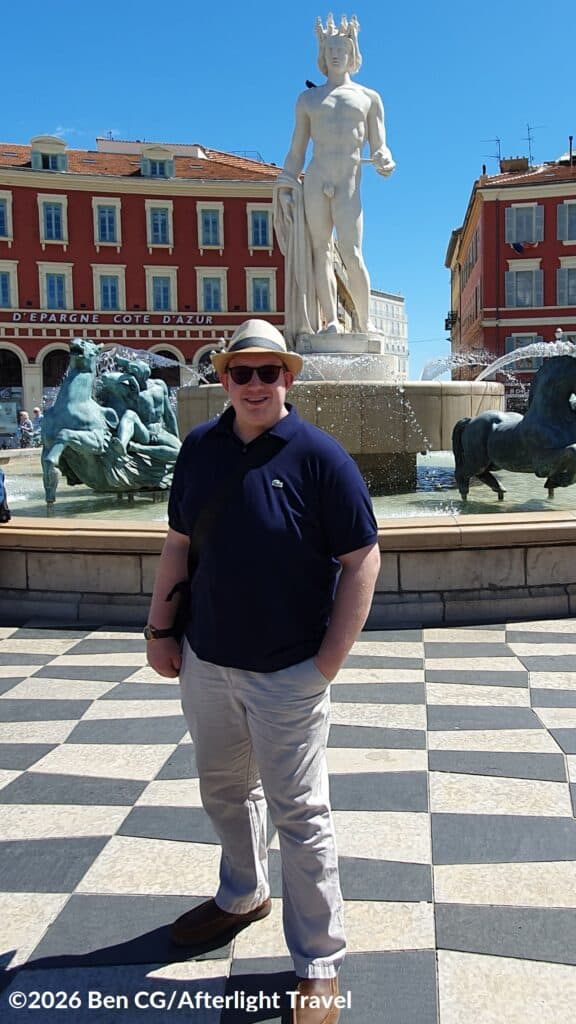
Learning Himself, Later Than Expected
Ben was diagnosed with autism early in life, long before there was language or community around it.
His ADHD diagnosis came much later — in his 30s.
And that shifted everything.
For years, he had no real AuDHD peer connection. Just coping strategies that felt normal because they were all he knew.
Now, he is still stepping into that conversation.
Listening to others.
Recognizing patterns in himself.
Questioning where he has been coping versus where he has been struggling.
That awareness comes with a mix of clarity and discomfort — including moments of imposter syndrome and internalized expectations he is still unpacking.
But it is also opening the door to something new:
Not just coping.
Building systems that might actually work.
When Travel Actually Starts
The hardest part is starting.
But once Ben arrives somewhere new, something shifts.
The dread fades.
He begins quietly — walking, observing, getting his bearings without pressure.
Then momentum builds.
Plans loosen.
Curiosity takes over.
He improvises more than he prepares.
There are inefficiencies — wasted time, unnecessary spending — but they rarely matter.
Because what drives him is something else:
The dopamine of discovery.
The satisfaction of capturing a photo or a moment.
The feeling of turning experience into something meaningful.
That is how he remembers places.
Pushing Past His Own Limits
Travel does not remove Ben’s challenges.
But it changes how far he is willing to push.
He walks longer.
Keeps going when he is exhausted.
Pushes past the limits that stop him at home.
There is an intensity to it — a kind of momentum tied to the peaks and troughs of ADHD.
At home, things stall.
On the road, they move.
And he leans into that.
He does not like being held back — which can make traveling with others complicated.
He wants shared experiences.
But he is still learning how to balance that with his own pace.
Familiar vs. Unknown
Not every destination feels the same.
Familiar places are easier.
Unfamiliar ones require more structure.
Ben is honest about that.
Places like India appeal to him, but would require:
- Careful planning around food
- Navigating language barriers
- Avoiding scams
- Possibly hiring a guide
Without that, the experience could become overwhelming.
He has felt that before — Istanbul stands out as one of the more intense trips he has taken.
Not bad.
Just demanding.
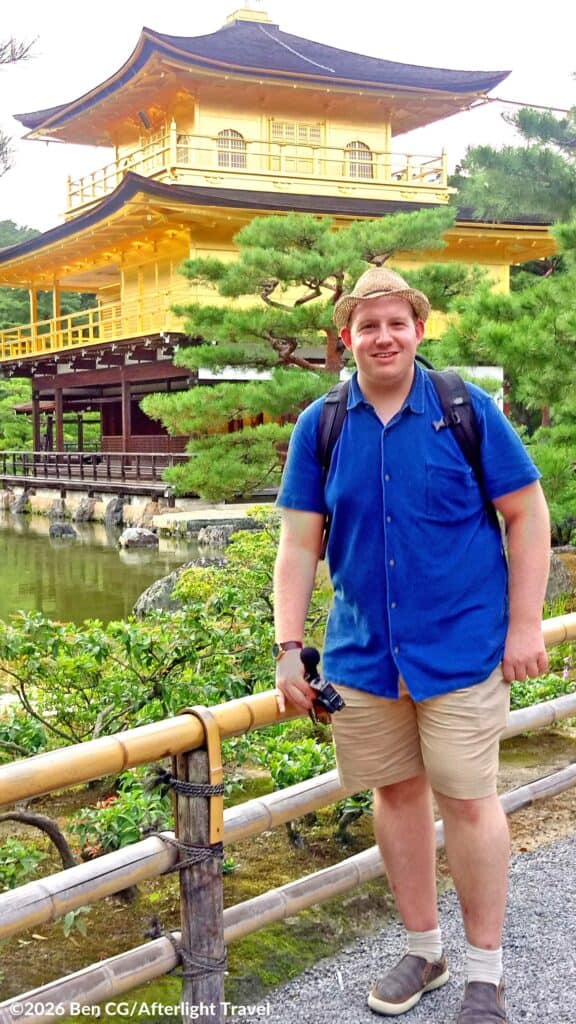
Invisible Needs While Traveling
Ben has spent most of his life adapting.
Not asking.
Not expecting accommodations.
Just figuring it out.
But travel still brings friction:
- Sensory overload
- Crowds and unpredictability
- Physical discomfort as a plus-size traveler
- The need for more space than standard systems allow
His experience overlaps with others in this series, including Shireen’s perspective on plus-size travel and medical devices.
And like many neurodivergent travelers, his needs are not always visible — something echoed in Michael’s neurodivergent travel experience and Al’s experience as a queer neurodivergent traveler.
Even outside of neurodivergence, invisible needs shape travel in significant ways, as explored in this guide to traveling with food allergies.
The Sunflower Lanyard
Ben has started using a sunflower lanyard — a subtle signal for hidden disabilities.
His experience with it is mixed.
Sometimes staff notice.
Sometimes the help is useful.
Sometimes it is not.
But the signal matters.
It reflects a broader shift — toward recognizing needs that are not immediately visible, and making space for them without requiring explanation every time.
A Night in Okinawa
One of Ben’s most meaningful travel moments came in Okinawa.
It started with overwhelm.
A remote island, unfamiliar food, culture shock — enough to make him leave early, worried about how he came across.
But later, at a hostel on a nearby island, the experience changed.
He was invited to sit with staff and other travelers.
No pressure.
No expectations.
Just conversation and quiet inclusion.
He could engage as much or as little as he wanted.
And for once, he did not feel like he had to explain himself.
Travel as Aesthetic and Memory
Ben does not just visit places.
He experiences them through mood, music, and atmosphere.
Each destination becomes a kind of internal scene:
- Southern Europe feels warm and timeless
- Scotland feels dramatic and moody
- Cities shift into something brighter and faster
Music shapes it all.
Each trip becomes something like a lived film — a sequence of moments tied together by feeling.
Building a System That Does Not Exist Yet
There is no perfect system behind how Ben travels.
But he is starting to look for one.
As he learns more about himself and connects with other neurodivergent voices, he is becoming more intentional.
Curious about frameworks like Neuro-Linguistic Programming.
Interested in how environments trigger behavior.
Because travel clearly does that for him.
It activates something.
The question now is whether parts of that can be recreated — not just on the road, but in everyday life.
Why He Keeps Going
Travel is not easy for Ben.
But staying still is not easy either.
And between those two, travel offers something more.
Momentum.
Engagement.
A version of himself that feels more alive.
That version does not always come naturally.
But it is there.
And every trip is another chance to step into it.
Explore More Inclusive Travel Stories
If Ben’s story resonates, you can explore more real experiences in the inclusive travel series.