
UNESCO Marseille: Cité Radieuse and Provence Day Trips
If you are searching for UNESCO World Heritage Sites in Marseille, here is the most important thing to know: Marseille has only one official UNESCO-listed component, and it is probably not what you are picturing.
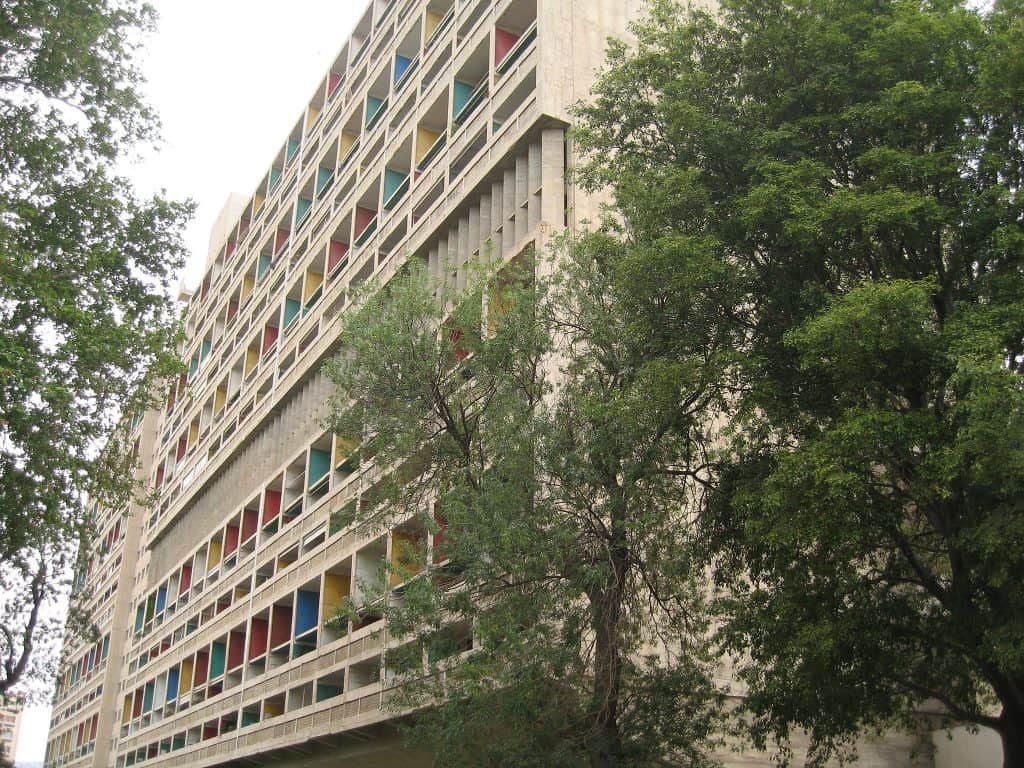
There are no ancient Roman amphitheaters or medieval castles listed under Marseille’s official entry. Instead, the city’s lone designation is Cité Radieuse, a mid-century, raw-concrete apartment complex designed by modernist architect Le Corbusier.
It is not a standalone site, but one of 17 locations spread across seven countries that collectively make up the official UNESCO World Heritage listing for Le Corbusier.
Marseille does have a broader proposal – the Rade de Marseille – on France’s UNESCO Tentative List, which includes the Vieux-Port, Le Panier, and Château d’If. However, a tentative listing carries no official World Heritage status.
If your main reason for visiting Provence is classical or medieval history, framing Cité Radieuse as Marseille’s sole official site—and pairing it with nearby day trips—will help you build a much more realistic itinerary. If you are still deciding whether to add the city to your broader trip, start with my honest breakdown on is Marseille worth visiting.
June 13, 2008 at 3:31:49 PM CDT License CC BY-ND 2.0
This post contains affiliate links. If you purchase through these links, I may earn a small commission at no additional cost to you.
Is Cité Radieuse Worth Visiting?
Cité Radieuse is historically significant because Le Corbusier wasn’t just designing an apartment block; he was trying to construct a “vertical city.” Built between 1947 and 1952 to address postwar housing shortages, the building combined hundreds of interlocking duplex apartments with internal shopping streets, a doctor’s office, a school, and a shared rooftop designed for communal recreation.
Prioritize Cité Radieuse if you are:
- Fascinated by modern architecture, Brutalism, or Le Corbusier.
- Curious about mid-century European history and urban planning.
- Interested in how architectural design attempts to shape social behavior.
- A repeat visitor to Marseille looking for a unique neighborhood perspective.
Skip it (or put it low on your list) if you are:
- On a short trip focused on ancient Greek, Roman, or medieval history.
- Looking for traditional Mediterranean charm, historic churches, or coastal vistas.
- Expecting a traditional museum experience.
What Makes Cité Radieuse Famous (and Controversial)?
Cité Radieuse is famous because it revolutionized postwar social housing through radical engineering—and controversial due to Le Corbusier’s divisive political history and top-down urban planning philosophy.
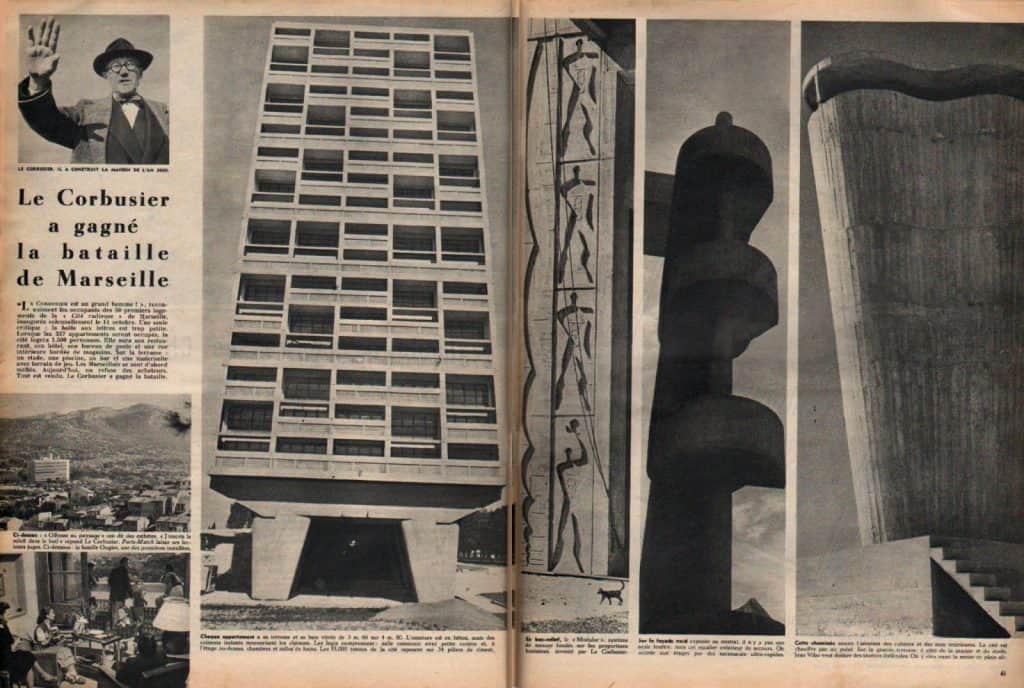
To appreciate why the building changed international architecture, look past the imposing concrete exterior and focus on its key design breakthroughs:
- Pilotis: The massive concrete stilts that lift the entire building off the ground, opening up public space below.
- Interlocking Duplexes: Apartments designed to span from one side of the building to the other, maximizing natural light and cross-ventilation.
- Internal Streets: Wide, shaded corridors housed on select floors to encourage neighborly interactions.
- The Modulor: A scale of architectural proportions derived by Le Corbusier from human body measurements and the Golden Ratio.
The Uncomfortable History
While Le Corbusier’s architectural influence is undeniable, his legacy is complex. Historians have documented his ties to far-right political groups in 1930s France, his attempts to work with the collaborationist Vichy regime during World War II, and antisemitic passages in his private letters.
Additionally, critics argue his top-down urban planning models often prioritized grand ideology over the organic flow of existing communities. Acknowledging these tensions makes evaluating his work a far richer, more honest experience.
Views of Marseille from the Cité radieuse by vincent desjardins via Wikimedia Commons
How to Visit Cité Radieuse (Without Ending Up in Cassis)
Because Cité Radieuse remains an active residential building, you cannot freely wander private residential halls. Visiting requires a clear plan for both transit and access
Getting There via Public Transit
- The Route: Take Metro Line M2 south to Rond-Point du Prado, then transfer to local RTM Bus 21, 22, or B1 to the Le Corbusier stop directly in front of the building.
- The Transit Caution: Do not board regional express coaches along Boulevard Michelet assuming every passing bus makes local stops. Express services skip local stops entirely – which is how I accidentally found myself on a scenic, non-stop ride straight to Cassis! Always verify the full stop sequence on the RTM transit network website before boarding.
Securing Access
- Official Guided Tours: Book the official Marseille Tourist Office guided tour to gain exclusive access to a preserved, historic model flat and private communal areas. Reserve several weeks ahead, as group sizes are strictly capped.
- Independent Public Access: Self-guided visitors can walk through the 3rd and 4th-floor “internal streets” to view small commercial shops, an art gallery, and a bookstore.
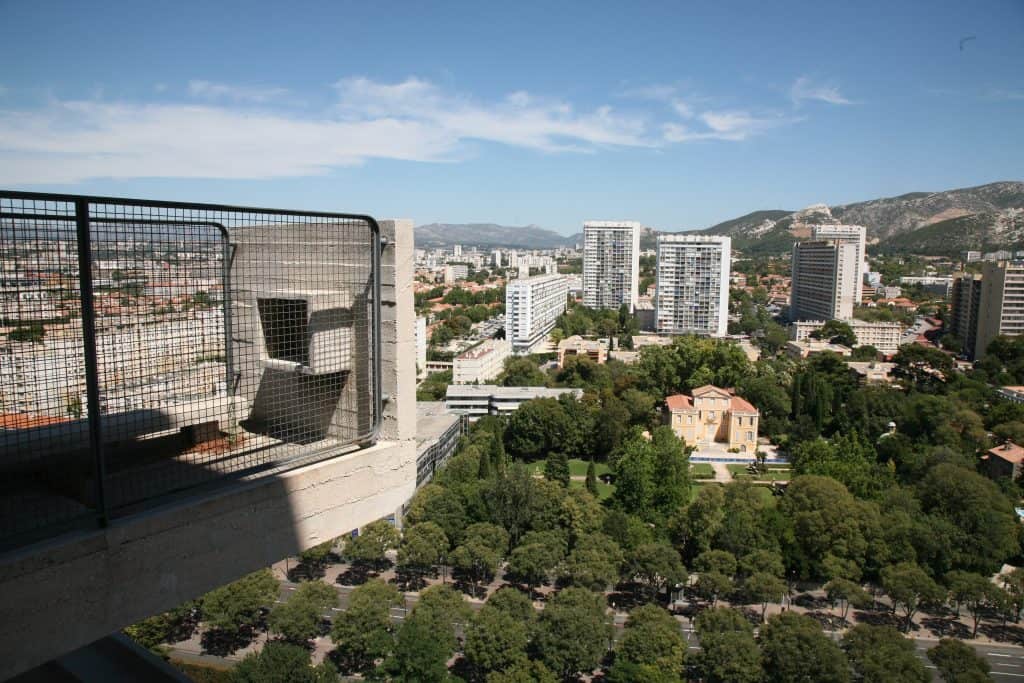
- Rooftop Access: The roof terrace offers sweeping views over Marseille. Access it by purchasing a ticket to the MAMO (Marseille Modulor) art center located on the roof, or by booking a table at the building’s internal restaurant or hotel bar.
Which UNESCO Day Trips Should You Take From Marseille?
If Cité Radieuse doesn’t match the historical era you came to explore, your best option is to use Marseille as a central hub for day trips to Provence’s classical UNESCO World Heritage Sites. Which site you choose depends entirely on whether you want to explore Roman monuments, medieval papal history, or ancient aqueducts.
If you prefer to skip organizing train schedules yourself, booking a guided Provence day tour from Marseille is an easy way to combine destinations like Pont du Gard and Avignon in a single trip.
For complete logistics, driving notes, and travel times across Provence, dive into my full guide to the best day trips from Marseille for history lovers.
| UNESCO Site | Primary Historical Focus | Travel Time from Marseille |
| Cité Radieuse | Mid-century modernism & urban housing | ~30 mins (Metro/Bus) |
| Arles | Roman monuments & Romanesque heritage | ~50 mins (Direct Train) |
| Avignon | Medieval Papal history & Gothic architecture | ~35 mins (TGV Train) |
| Orange | Roman theater & imperial monuments | ~1 hr 15 mins (Train) |
| Pont du Gard | Ancient Roman aqueduct engineering | ~1 hr 30 mins (Car/Tour) |
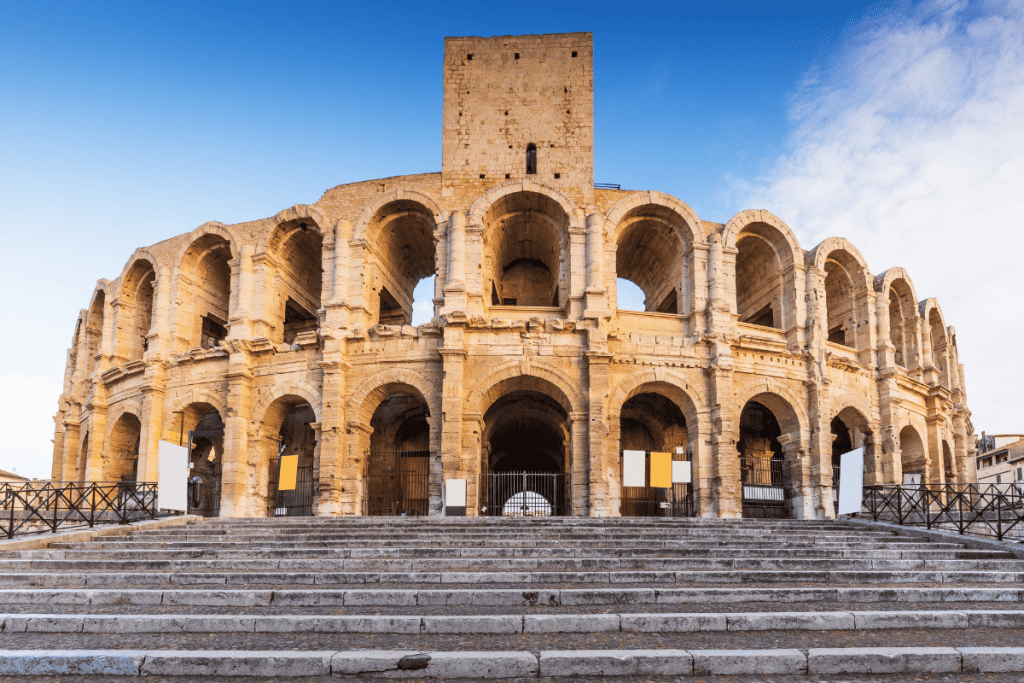
1. Arles: Best Overall for Roman & Romanesque History
Arles is the top choice for overall historical depth. Its UNESCO listing covers a dense cluster of monuments—including an ancient amphitheater, a Roman theater, subterranean cryptoporticus vaults, and the Romanesque Church of Saint-Trophime.
2. Avignon: Best for Medieval History
During the 14th century, the Papacy relocated from Rome to Avignon. The massive Palais des Papes, the episcopal ensemble, and the famous Saint-Bénézet bridge form an extraordinary collection of Gothic architecture and medieval religious authority.
3. Orange: Best for Roman Spectacle
Orange features one of the best-preserved Roman theater facades in the Western world, complete with its monumental stage wall, along with an imperial Triumphal Arch marking Roman military power.
4. Pont du Gard: Best for Roman Engineering
Spanning the Gardon River, this three-tiered aqueduct bridge was built in the 1st century AD to carry water over 30 miles to Nîmes. It remains a masterclass in ancient stone masonry and gravity-led hydraulic engineering.
What About the “Tentative” UNESCO Sites in Marseille?
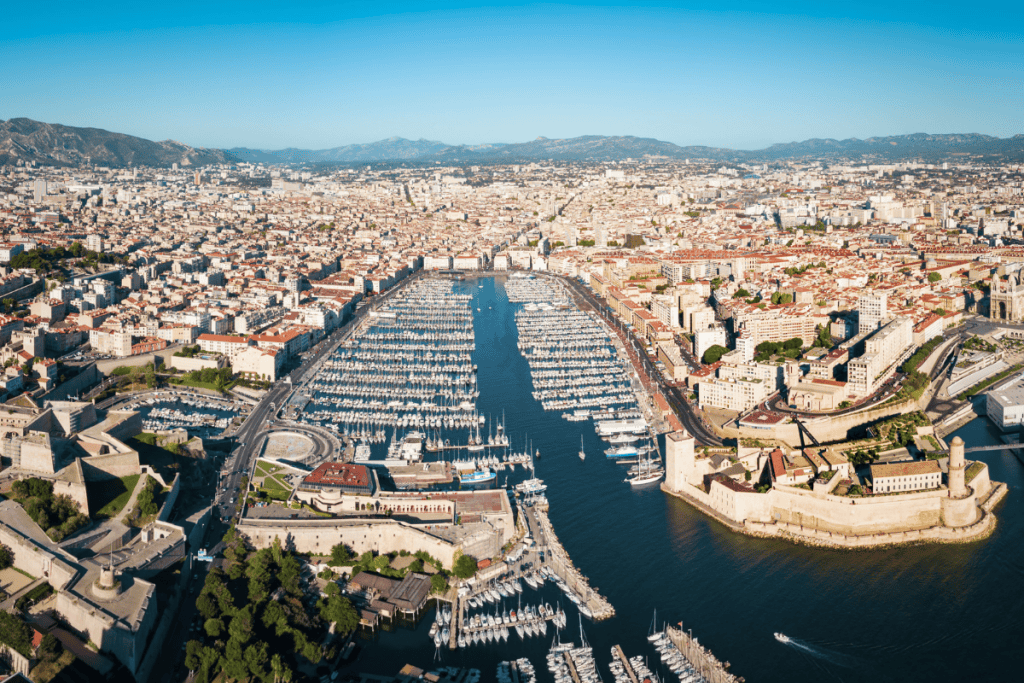
The official Rade de Marseille entry on France’s UNESCO Tentative List represents the broader historical narrative of the city. While these sites do not currently hold official UNESCO status, they are essential stops for understanding Marseille’s 2,600-year history:
- Vieux-Port: The natural harbor where Phocaean Greeks founded Massalia around 600 BC.
- Le Panier: Marseille’s oldest quarter, built on the site of the ancient Greek acropolis.
- Mucem & Fort Saint-Jean: A modern museum integrated into a historic 17th-century fortification, focusing on Mediterranean civilizations.
- Notre-Dame de la Garde: The 19th-century neo-Byzantine basilica overlooking the city and protecting its mariners.
- Château d’If: The island fortress built by King Francis I, immortalized in Alexandre Dumas’s The Count of Monte Cristo.
If you want guided commentary while exploring these central neighborhoods, joining a tip-based GuruWalk free walking tour of Marseille or reserving a top-rated Marseille walking tour is a great way to discover the history behind the Vieux-Port and Le Panier with a local guide.
To build your own self-guided route instead, follow my dedicated Marseille itinerary for history lovers.
Frequently Asked Questions
Is Cité Radieuse the only official UNESCO World Heritage Site in Marseille?
Yes. Cité Radieuse is Marseille’s sole official UNESCO World Heritage inscription, as part of the multi-nation Le Corbusier listing.
What is a UNESCO Tentative Site?
A Tentative Site is a landmark or district that a national government intends to nominate for full World Heritage status in the future. It carries no official UNESCO designation or protection on its own.
Are the Calanques UNESCO-listed?
No. Calanques National Park is a protected national park, but it is not inscribed on the UNESCO World Heritage List.
Cité Radieuse is a fascinating stop if you want to understand how postwar architects reimagined urban living, but it only represents one brief chapter of Marseille’s long history. Balancing a visit to Le Corbusier’s vertical city with the historic harbor and a quick day trip to Roman Arles or medieval Avignon gives you the best of both worlds in Provence.
Need Help Planning Your Provence Itinerary?
If you want to design a seamless trip combining UNESCO sites, local transit routes, and historic landmarks across Provence, explore my custom trip planning services on my Work With Me page.