
Lyon UNESCO World Heritage Site: Your Complete Guide
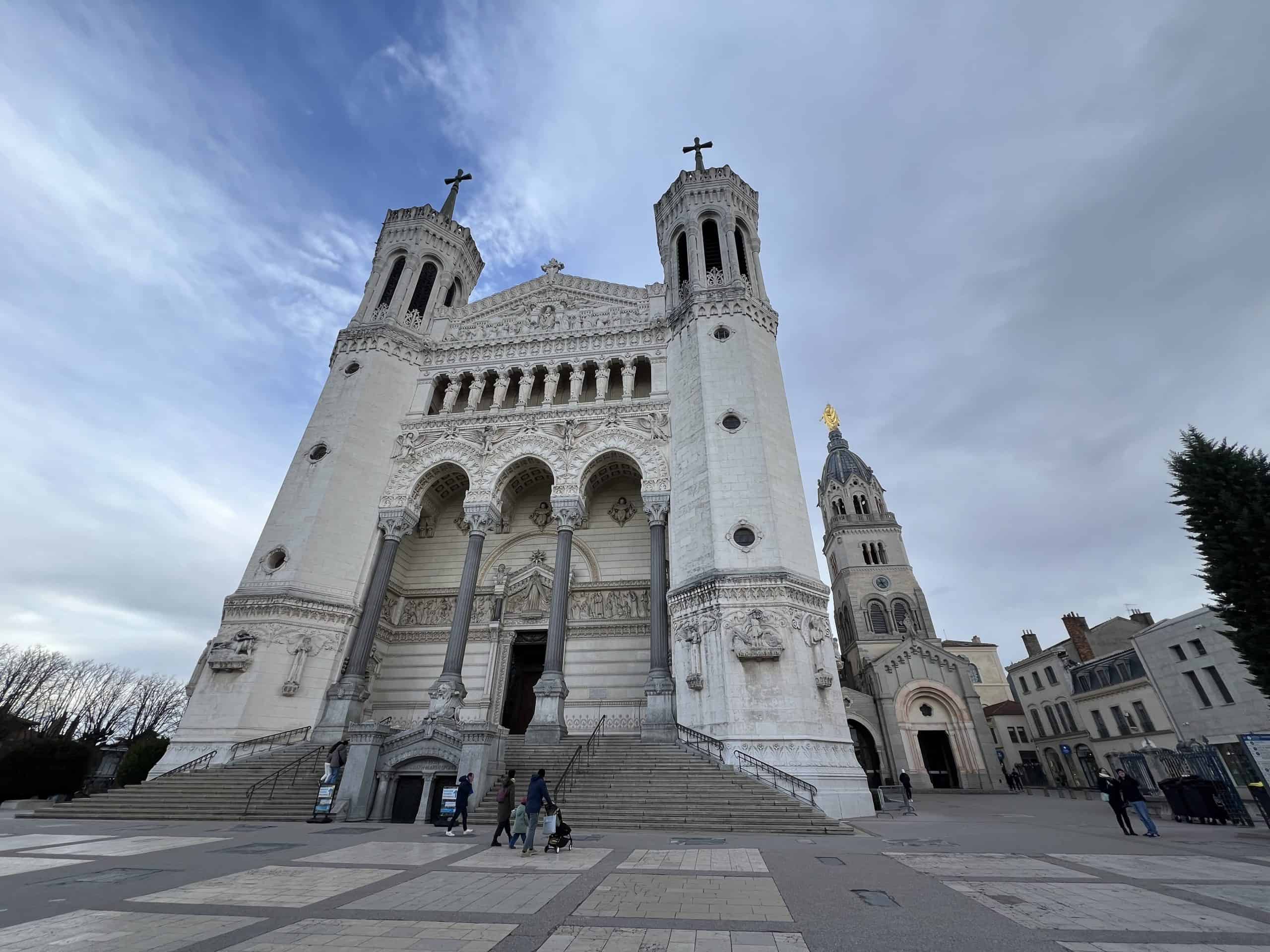
You can see the Basilica of Notre-Dame de Fourvière from almost anywhere in Lyon, white and unmistakable on the hill above the city. What you cannot see from below is its grandeur.
That only becomes clear when you climb the stairs from the funicular stop and stand in front of it.
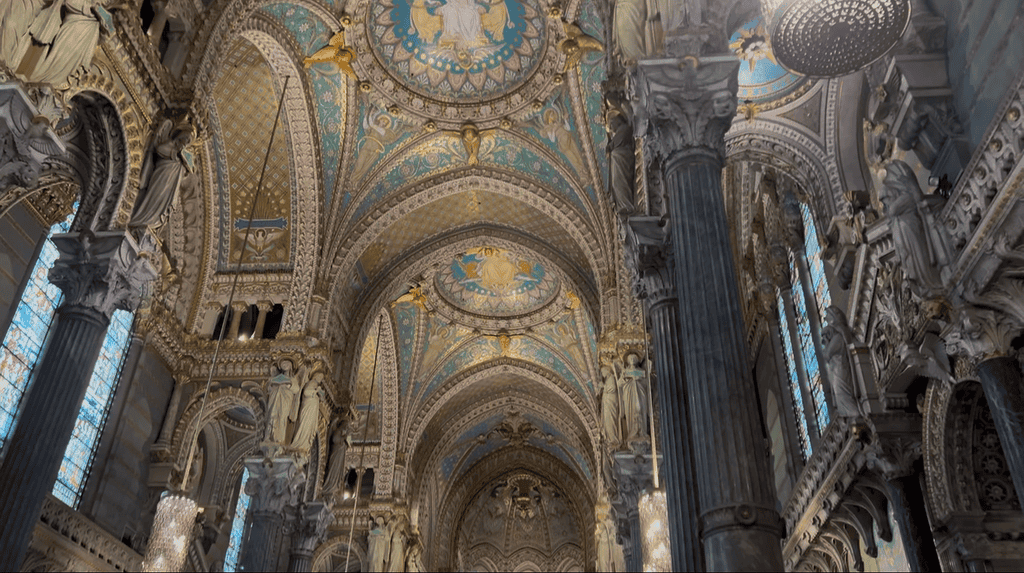
It is magnificent. The white stone is so bright you would need sunglasses on a cloudy day. Every inch of the exterior is carved, and inside, the walls are covered in mosaics. I did not expect any of it. It felt like a dream.
What I didn’t know: the Roman theaters were a 5-minute walk downhill. I missed them entirely until my second trip to Lyon.
I had come to Lyon knowing it was a UNESCO World Heritage Site. I didn’t know why. UNESCO did not inscribe the basilica, or the theaters, or any single building. It inscribed the city.
This guide explains what UNESCO saw, district by district, so you can full experience Lyon instead of just walking through it.
**If you make a purchase using the links below, I may receive a small commission for that purchase. I only recommend experiences that align with the historic quality of The Nerd Traveler. Thank you in advance for your support.**
What Is the Lyon UNESCO World Heritage Site?
The Historic Site of Lyon was inscribed in 1998. It is not a single monument. It is a 1,055-acre (427-hectare) section of the living city, covering 4 neighboring districts:
- Fourvière: Roman Lugdunum and the city’s religious heights
- Vieux Lyon: the Renaissance merchant quarter along the Saône
- The Presqu’île: French for “almost an island,” the peninsula between the rivers, laid out from the 1600s to the 1800s
- The slopes of Croix-Rousse: the silk weavers’ district from the 1800s
Each district comes from a different era. Most European cities rebuilt over their old cores. Lyon kept expanding east, across its rivers, and each earlier district remaining and still in use.
Lyon UNESCO Site: Quick Facts
| Official name | Historic Site of Lyon |
| Inscribed | 1998 |
| UNESCO criteria | Cultural (ii) and (iv) |
| Inscribed area | 1,055 acres (427 hectares) |
| Buffer zone | 798 acres (323 hectares) |
| Districts | 4 |
| Timeline | 43 BC to today |
| Protected nationally since | 1964 (Vieux Lyon) |
Map of Lyon’s UNESCO Boundary
How to Use This Guide
This guide covers the history and the why behind the designation. For everything practical, use the rest of the series:
- Transit, hours, restaurants, hotels, and guided tours: Lyon France Itinerary
- Seasons, how many days, and food history: Is Lyon Worth Visiting?
- Dijon, Annecy, and Beaujolais: Best Day Trips from Lyon
The 4 Districts of Lyon’s UNESCO Site
The districts below run in historical order, from Roman to industrial.
1. Fourvière: Roman Lugdunum and the Hill That Prays
Era: 43 BC to the 1800s
Type: Roman city and religious sanctuary
What UNESCO recognized: The Roman foundation of Lugdunum, capital of Roman Gaul, still visible on the hill where the city began
What Is Fourvière?
In 43 BC, Lucius Munatius Plancus, one of Julius Caesar’s former lieutenants, founded Lugdunum on Fourvière hill. It became the capital of Roman Gaul.
Locals call Fourvière “the hill that prays.” In 1643, as Bubonic Plague (also known as “The Black Death”) spread across France, Lyon’s leaders climbed the hill and dedicated the city to the Virgin Mary, vowing an annual pilgrimage if Lyon was spared. The ceremony still takes place every September 8th. The basilica followed, built between 1872 and 1884.
Nerd Alert! ✨ The Fête des Lumières started on this hill. In 1852, Lyon placed a gilded statue of Mary on the hilltop chapel. Flooding pushed the unveiling from September 8th to December 8th. When bad weather threatened that night’s celebrations, residents set candles in their windows to honor the statue anyway. Lyon has lit up every December since.
What to Look For on Fourvière
The Basilica’s Nickname Locals call it “the upside-down elephant.” Look at the 4 squat corner towers and you will see the legs.
The Scale of the Grand Théâtre At its largest, the theater seated about 10,000 people. In June and July, the Nuits de Fourvière festival still stages performances on the same stone.
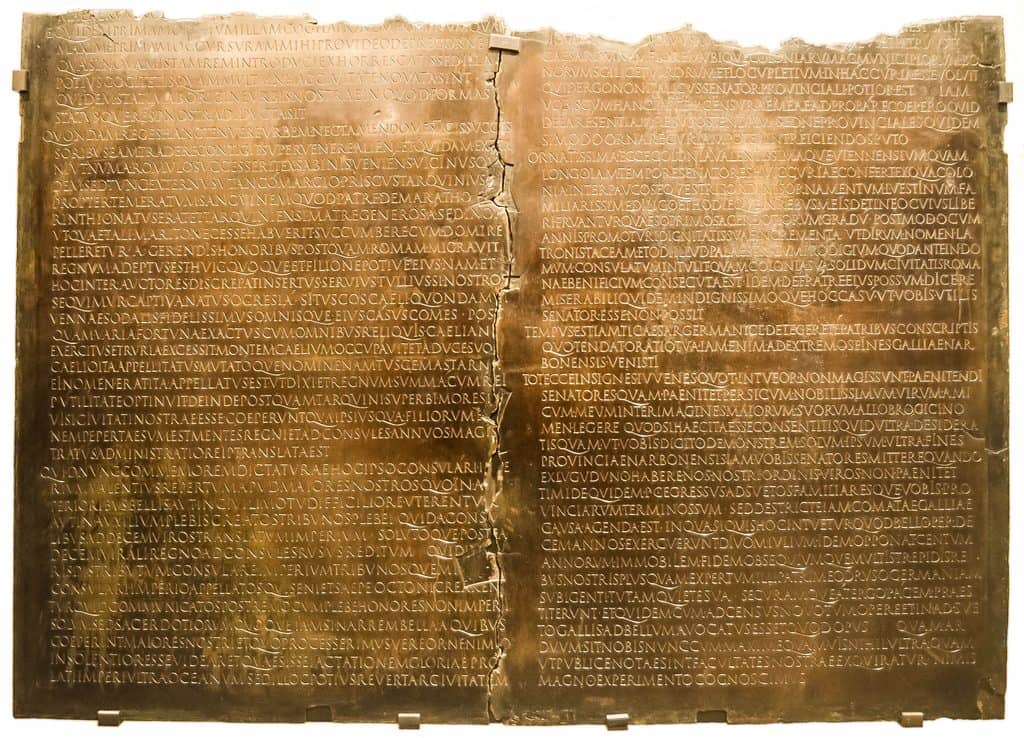
The Claudius Tablet In the Lugdunum Museum, a bronze record of a speech by Emperor Claudius, who was born in Lugdunum, arguing that Gallic nobles should be allowed into the Roman Senate.
My tip: The Roman theaters are about a 5-minute walk downhill from the basilica. I didn’t realize how close they were and missed them until my second trip. See both in the same visit.
2. Vieux Lyon: The Renaissance Merchant City
Era: 1400s and 1500s
Type: Medieval and Renaissance urban quarter
What UNESCO recognized: One of the largest Renaissance districts in Europe, built when Italian merchants and bankers made Lyon a center of trade
What Is Vieux Lyon?
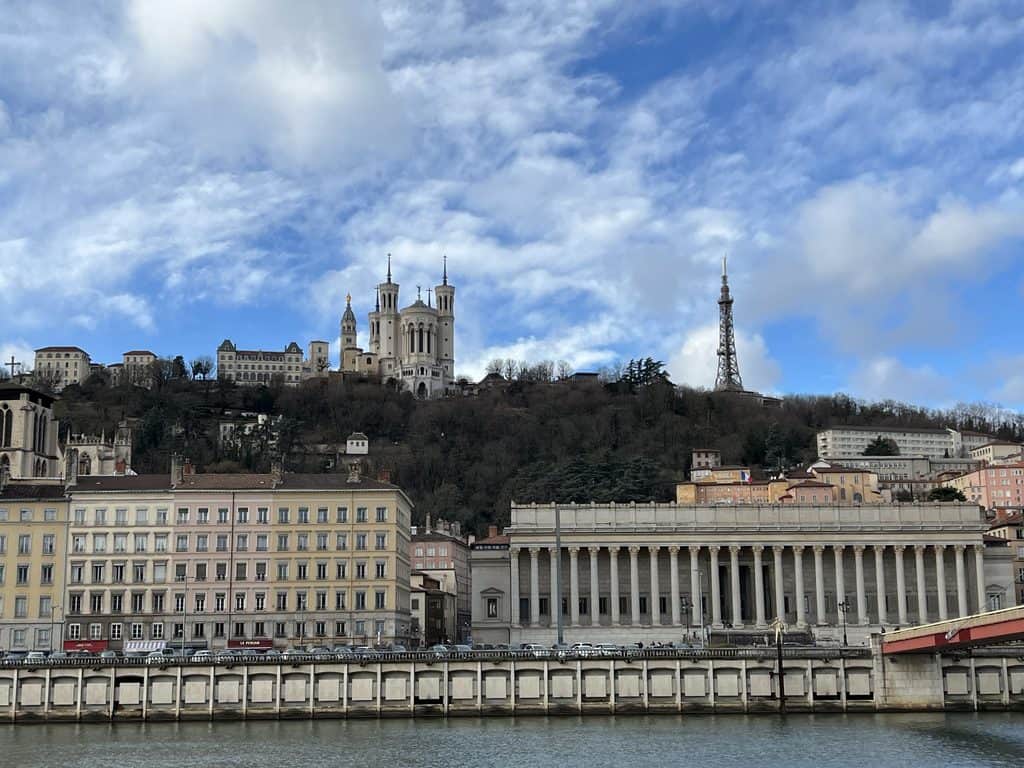
Lyon grew rich on trade in the 1400s and 1500s, and Italian merchants and bankers settled along the Saône. Vieux Lyon was squeezed between the river and the Fourvière cliffs, so they built up: tall houses in Italian Renaissance style, with interior courtyards and spiral stair towers.
Passages cut straight through the buildings to reach the next street. Those are the traboules, from the Latin trans-ambulare, “to walk through.”
Centuries later, they served a new purpose. Nazi Germany invaded France in May 1940 and German troops occupied Lyon in November 1942. Lyon became known as the capital of the French Resistance, and couriers used the traboules to move clandestine papers out of sight.
Nerd Alert! ✨ Vieux Lyon was protected long before UNESCO arrived. In 1964, it became the first protected historic district in France, 34 years before the 1998 inscription.
What to Look For in Vieux Lyon
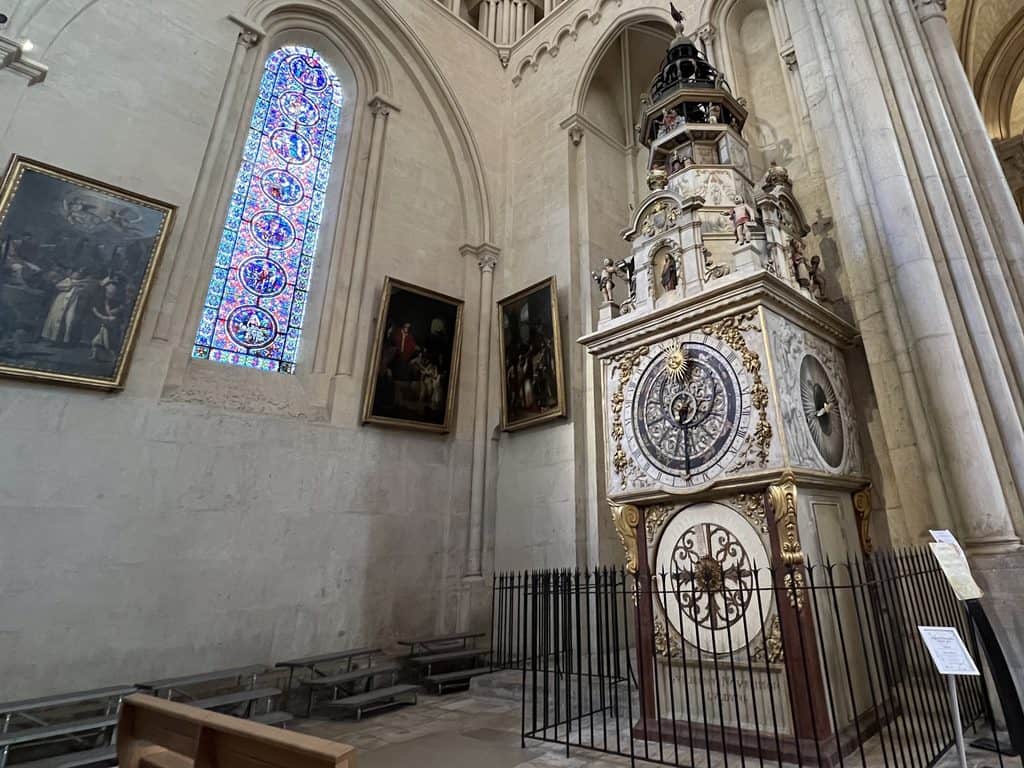
Saint-Jean Cathedral Built between 1180 and 1480, so you can watch Romanesque turn into Gothic as you walk from the apse to the facade. The astronomical clock in the north transept, first documented in 1379, stands about 30 feet (9 meters) tall. Vandalized in 2013, it was fully restored in September 2024.
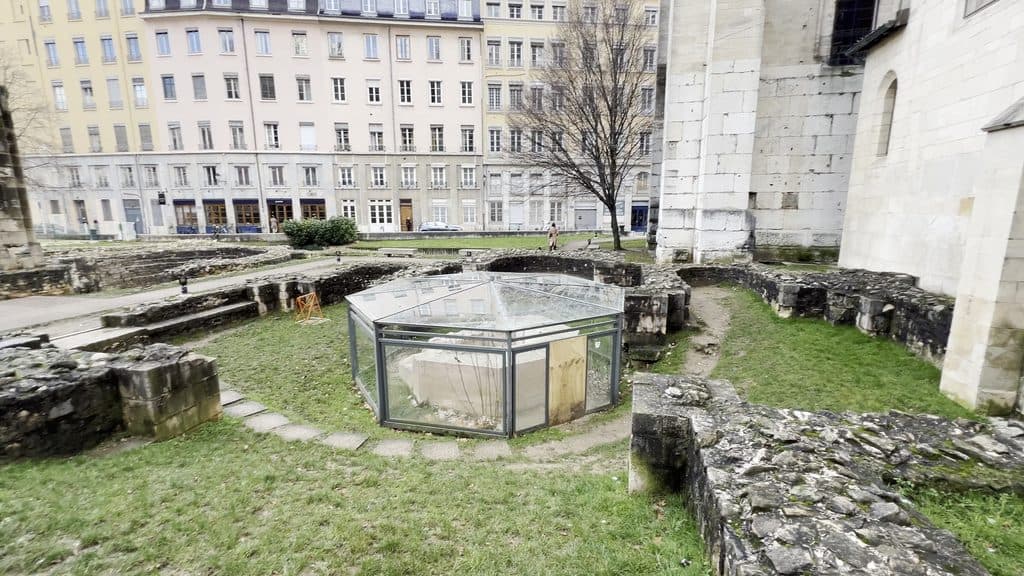
Jardin Archéologique Just north of the cathedral, this free garden shows the footprint of the churches that stood here first, including a baptistery from the 300s, one of the oldest found in Gaul. They stood beside Saint-Jean until they were demolished after the French Revolution.
La Tour Rose and the Longest Traboule La Tour Rose, a pink spiral stair tower in a courtyard on Rue du Bœuf, is the traboule everyone photographs. The longest in Vieux Lyon runs from 54 Rue Saint-Jean to 27 Rue du Bœuf.
Traboule etiquette: Doors are open generally from 7:00 AM to 7:00 PM, 365 days a year, under a 1990 agreement, which states the city maintains the passages and owners keep the doors open. Look for a push-button or latch release beside the buzzer panel. Keep your voice low, do not photograph residents, and never climb stairwells into private hallways. Residents can lock the doors again if visitors get too loud.
My tip: For the traboules, a guide is worth it. They hide behind plain wooden doors, and knowing which ones open, and which routes the Resistance used, takes local knowledge. Click here for a guided traboules tour.
3. The Presqu’île: Lyon’s Civic Heart
Era: 1600s to 1800s
Type: Classical civic center
What UNESCO recognized: The planned squares and civic buildings that marked Lyon’s expansion east, off the hill and across the Saône
What Is the Presqu’île?
As Lyon outgrew Vieux Lyon, the city spread onto this strip of land between the Saône and the Rhône. The Hôtel de Ville rose on Place des Terreaux between 1646 and 1672. The Hôtel-Dieu hospital gained its domed riverfront facade in the 1700s.
What to Look For on the Presqu’île
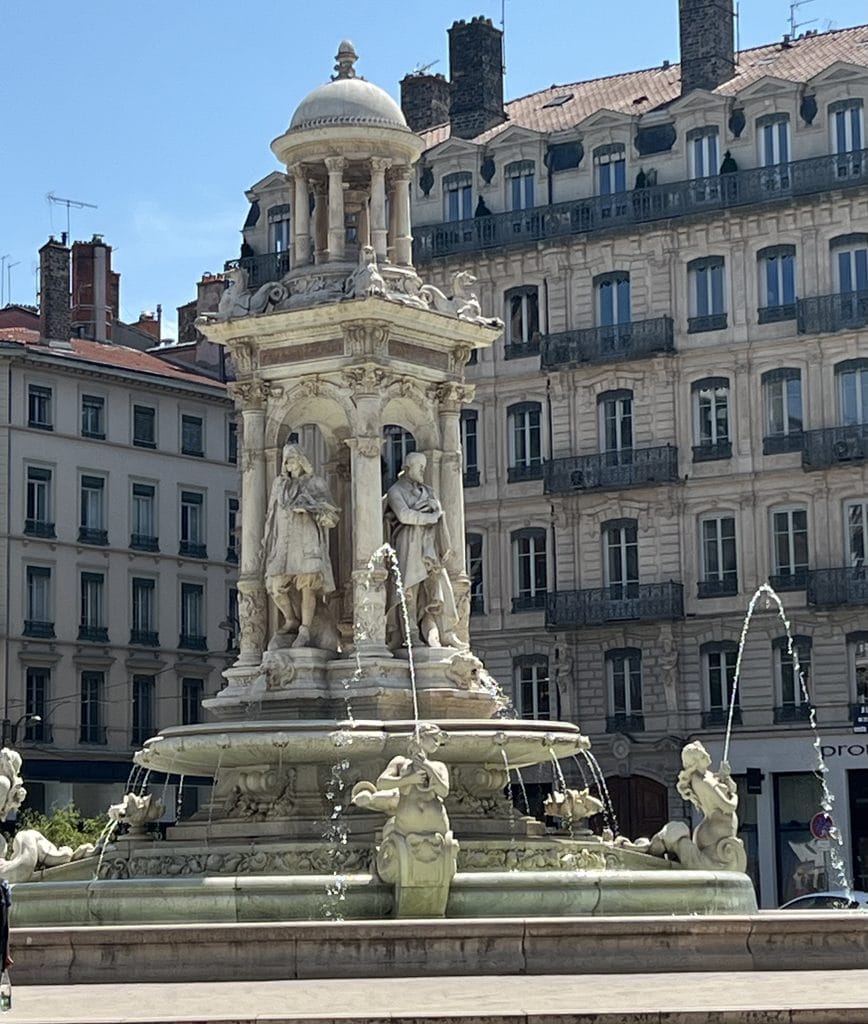
Place des Terreaux The Hôtel de Ville anchors one side of the square. The lead fountain in the center is by Frédéric Bartholdi, who designed the Statue of Liberty.
Grand Hôtel-Dieu A working hospital for more than 800 years, until 2010. Walk the riverfront side to see the domed facade from the 1700s. It reopened in 2018 with shops, a hotel, and the Cité Internationale de la Gastronomie.
My tip: Read up on Lyon’s food history before you go. I knew the buildings before my first trip, but not the food. And I wish I had. Knowing the story would have let me read a menu the way I read a facade. I cover it in Is Lyon Worth Visiting?
4. The Slopes of Croix-Rousse: The Hill That Works
Era: 1800s
Type: Industrial silk-weaving district
What UNESCO recognized: A neighborhood built around a single industry, with buildings designed to hold the Jacquard loom
What Is Croix-Rousse?
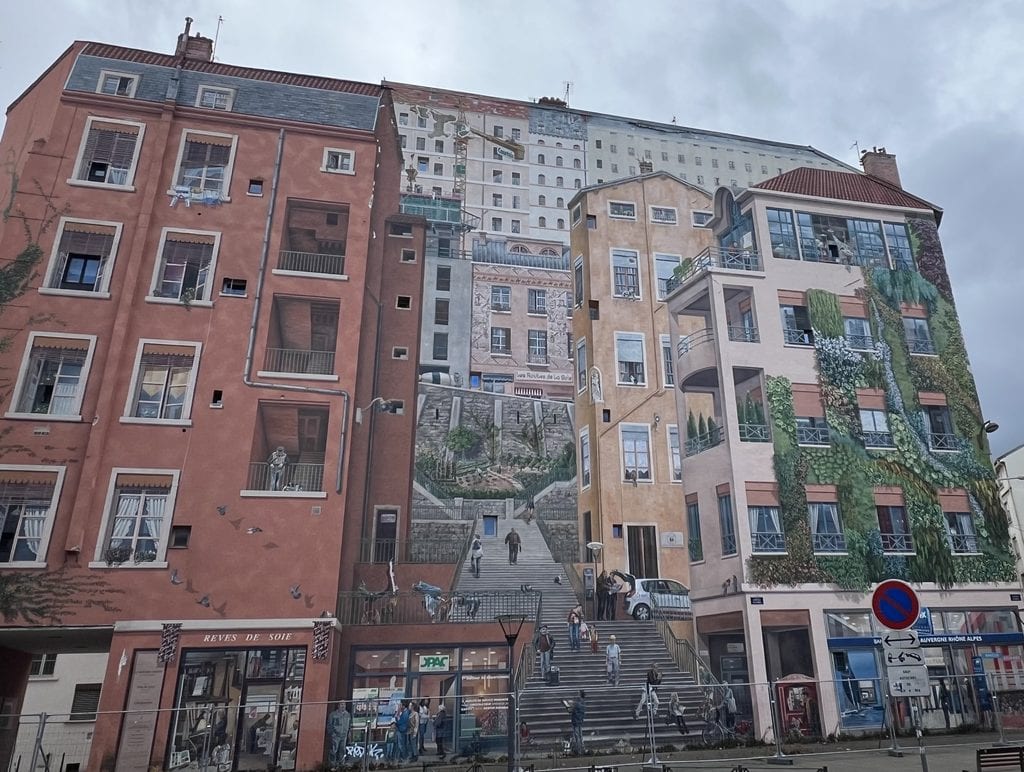
In 1804, Joseph-Marie Jacquard introduced a loom controlled by punched cards. The machines stood about 13 feet (4 meters) tall, too big for the old workshops of Vieux Lyon. The silk trade moved up the slopes of Croix-Rousse, into buildings designed around the looms.
The weavers, called canuts, worked 14 to 16 hours a day and stayed in debt to the merchants who bought their silk. They rose up in 1831, 1834, and 1848. The 1831 revolt is considered one of the first workers’ uprisings of the Industrial Revolution.
Nerd Alert! ✨ Jacquard’s cards worked on a simple rule: a hole let a needle through, no hole blocked it. In the 1830s, English mathematician Charles Babbage borrowed punched cards to feed instructions to his Analytical Engine, a design for a mechanical computer. Punched cards went on to carry computer programs well into the 1900s.
What to Look For in Croix-Rousse
Canut Buildings You can spot them from the street. Ceilings about 13 feet (4 meters) high for the looms, tall windows for daylight, heavy beams for the vibration. Families slept on wooden mezzanines above the machines.
Cour des Voraces At 9 Place Colbert, a 6-story open-air staircase built in 1840. It takes its name from a weavers’ society active in the 1848 revolt.
My tip: Croix-Rousse has a different feel from Vieux Lyon and the Presqu’île. It is more industrial, more bohemian, and much hillier. Be ready for a real incline. Take Metro Line C to the top and walk down through the slopes, so the hill works with you instead of against you.
Why Lyon’s 4 Districts Matter Together
Lyon meets 2 of UNESCO’s cultural criteria: (ii), for the exchange of ideas over time, and (iv), as an outstanding example of urban development. Each district tells part of that story.
Fourvière is inscribed for origin: the hill where Roman Lugdunum began in 43 BC.
Vieux Lyon is inscribed for exchange: Italian merchants and bankers brought Renaissance architecture to a narrow riverbank and built up.
The Presqu’île is inscribed for civic planning: the grand squares of a city that had outgrown its old core.
Croix-Rousse is inscribed for industry: a neighborhood engineered around a machine.
Rome, London, and Paris rebuilt over their earlier layers. Lyon moved over and left them. That is what makes this site rare.
Because Lyon’s UNESCO site is a living city, preserving it depends on the people who live there. Traboules pass through private homes, and visitor numbers strain the agreements that keep those doors open. Following the etiquette above is part of what keeps the site open to the next traveler.
The Full UNESCO Picture Around Lyon
The Historic Site of Lyon is not the only UNESCO recognition within reach. My day trips guide covers Dijon, part of the Climats of Burgundy World Heritage Site, Annecy and its prehistoric pile dwellings, and the Beaujolais Global Geopark. Two more are worth knowing about.
Convent of Sainte-Marie de La Tourette, Éveux About 30 minutes west, 19 miles (30 km). A concrete Dominican monastery by Le Corbusier, part of his World Heritage listing inscribed in 2016.
The Gastronomic Meal of the French This is a different category of UNESCO recognition: Intangible Cultural Heritage, inscribed in 2010. It recognizes the French tradition of the shared, multi-course meal, and there is no better city to experience it than Lyon.
Why the distinction matters: World Heritage Sites, Intangible Cultural Heritage, and Global Geoparks are 3 separate UNESCO programs with different criteria. All are worth knowing about, but they are not the same designation.
FAQs About Lyon’s UNESCO World Heritage Site
Why is Lyon a UNESCO World Heritage Site?
Lyon was inscribed in 1998 because it preserves more than 2,000 years of continuous urban growth. The city expanded east across its rivers instead of rebuilding over its old quarters, so its Roman, Renaissance, civic, and industrial districts still stand side by side.
What areas are inside the UNESCO boundary?
4 connected districts: Fourvière, Vieux Lyon (Saint-Jean, Saint-Paul, and Saint-Georges), the Presqu’île from Place Bellecour to Place des Terreaux, and the slopes of Croix-Rousse.
Is the Lyon UNESCO site free to visit?
Walking the districts, the Jardin Archéologique, and the open traboules costs nothing. Museums such as the Lugdunum Museum and La Maison des Canuts charge admission.
What is the difference between Fourvière and Croix-Rousse?
Fourvière is “the hill that prays,” for its churches and religious history. Croix-Rousse is “the hill that works,” built around the silk weavers and their looms.
Why are the traboules part of the UNESCO site?
They are the clearest physical evidence of how Lyon worked. In Vieux Lyon, they moved merchants through a crowded Renaissance quarter. In Croix-Rousse, they moved silk down the hill. During World War II, they hid the Resistance.
Final Thoughts: Look Closer
Lyon rewards the curious traveler. The details are there, but they hide behind plain wooden doors, in a garden beside a cathedral, and a few minutes’ walk from the sights everyone else is photographing.
What stayed with me were the Roman fragments scattered in and around Vieux Lyon. Not roped off in a museum. Just there, beside the street, like little whispered reminders that this was once a Roman city.
On my first trip, I saw the buildings. On my second trip, I started to see how they connect. This guide exists so you can see both on your first visit.
If you would like help planning a custom France itinerary built around UNESCO sites and your specific travel style, click here to work with me.
More Lyon Planning Resources
- Is Lyon Worth Visiting?: the verdict after 2 trips, seasons, and food history
- Lyon France Itinerary: day-by-day plans, restaurants, hours, and transit
- Best Day Trips from Lyon: Dijon, Annecy, and Beaujolais
- The Confident Traveler: my AI travel planning assistant for planning your upcoming trips and your first 1 to 2 days on the ground